I have one goal – for people to end up with structurally sound buildings they love. Follow these guidelines and you are far more likely to love your new building.
Your work starts before you sign a contract.
ASSUME YOUR PROJECT WILL END IN COURT
ASSUME YOUR BUILDING PROVIDER/CONTRACTOR IS UNTRUTHFUL
ASSUME YOUR PROJECT WILL BE MORE EXPENSIVE
ASSUME YOUR PROJECT WILL TAKE LONGER THAN EXPECTED
Failure to accept these four statements will set you up for grave disappointment.
Buy Materials Yourself
 Contractors generally have no qualms about using leftover materials from prior jobs, or purchasing cheaper materials than specified. If you seriously are concerned about material quality, take control yourself. Be aware, when contractors purchase materials for your building, they will mark them up. Paying for materials yourself assures you of not having liens against your property for bills your contractor did not pay.
It is very important you make decisions on exact materials you use for your building. With each type of material, there is a high end product, low end product, and something middle grade. Educate yourself on differences between each type of material, so you can choose based on your needs. If you allow a contractor to make any of these choices for you, they can really screw you over. Picking the right materials can make a huge difference. If a contractor picks wrong materials, things are bound to go wrong.
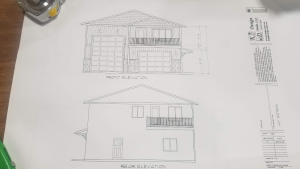
Only Use Engineer Sealed Plans Specific to Your Building
Your building provider or contractor may have decades of experience, but unless he or she has initials “P.E.” (Professional Engineer) after his or her name, he or she is not qualified to make structural decisions. Have any deviations from plans reviewed and approved by your building’s engineer.
A building provider or contractor who sluffs off values of a fully engineered building plan does not have your best interests at heart.
Do Not Agree to a “Gentleman’s Agreement”
Always, always, always put your agreement with a building provider and/or contractor in writing. Having everything in writing has nothing to do with trust. It helps ensure everyone remembers what agreed upon terms are. Months later you do not want to start arguing over what was originally agreed to. Contracts should be very detailed, including all expectations for both parties.
Read the contract thoroughly, including all terms and conditions.
Keep in mind a good contract is written to provide clear communication between two parties. It also protects both parties, and should never be “one sided”. From my years as a general contractor, a well thought and spelled out contract (in writing) made for smoothest projects.
Before agreeing to any work (as well as making any payment), require a written proposal describing in plain language what materials will be provided and/or work will be done. Do not sign a contract you do not fully understand. If anything makes little or no sense, ask for a written explanation. Still feel dazed and confused, or not getting what you feel are straight answers? Pay a one-time fee so a lawyer can walk you through what, exactly, it says and alert you to vague language. Terms such as “Industry Standard” have no real definition.
A total price should be as inclusive as possible. Any unforeseeable work or unit prices should be clearly addressed (like what happens if holes are difficult to dig). Maintain all paperwork, plans and permits when the job is done, for future reference.
Familiarize yourself with contract terms.
Proposals and contracts should contain specific terms and conditions. As with any contract, such terms spell out obligations of both parties, and should be read carefully. Be wary of extremely short or vaguely worded contracts. A well written contract should address all possibilities and may very well take more than one page.
If hiring a contractor, do not pay in full until all work is completed and lien releases provided from any and all material suppliers.
A statement regarding compliance with applicable Building Codes should be included, as well as what Code and version is being used and all applicable loading criteria. If the contractor is doing building permit acquisition, it should be stated in writing and a permit should be provided prior to work starting.
 Hiring a contractor? Then, standards for workmanship should be clearly specified. For post-frame buildings this would be Construction Tolerance Standards for Post-Frame Buildings (ASAE Paper 984002) and Metal Panel and Trim Installation Tolerances (ASAE Paper 054117). Depending upon scope of work, other standards may apply such as ACI (American Concrete Institute) 318, ACI Concrete Manual and APA guidelines (American Plywood Association).
Articles to follow will cover specific terms of contracts and why they are important.
Stay tuned….
 Your new building kit is designed for an average physically capable person, who can and will read and follow instructions, to successfully construct your own beautiful building shell, without extensive prior construction knowledge (and most of our clients do DIY – saving tens of thousands of dollars). We’ve had clients ranging from septuagenarians to fathers bonding with their teenage daughters erect their own buildings, so chances are – you can as well!
 As a member of most every active barndominium group in the social media world, I read all too often how new or prospective barndominium owners proudly proclaim they are or will be building where Building Codes are not enforced.
 MYTH #4 I NEED TO HIRE A BUILDER FIRST, BEFORE I DO ANYTHING
 bonding with their teenage daughters erect their own buildings, so chances are – you can as well!
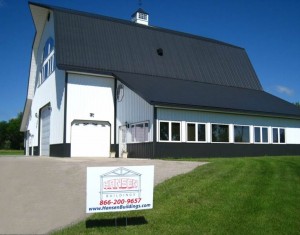 Your new building investment includes full multi-page 24” x 36” structural blueprints detailing location and attachment of every piece (as well as suitable for obtaining Building Permits), our industry’s best, fully illustrated, step-by-step installation manual, and unlimited technical support from people who have actually built post frame buildings. Even better – it includes our industry leading Limited Lifetime Structural warranty!
 Now let them work. Don’t try to supervise every blow of a hammer or placement of every stud. These guys are professionals and they know more about their trades than you do, and probably, if they came to you well recommended, they take pride in their work. Let them do it.
 Never accept a bid “by the hour.” It doesn’t work. Remember Murphy’s Law; “If you want to see how long a job can take, pay someone by the hour.” You may pay a little more for a fixed price bid, but it’s worth it for peace of mind.
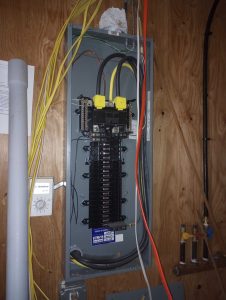 Utilities must be connected. Exactly who is responsible for running water lines, sewer lines, and electrical hookups will vary with each subcontractor involved. Get responsibility pinned down when you are hiring subs, then follow through to be sure it is done properly.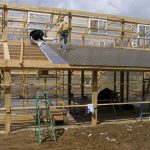
 I do not trust contractors to buy materials for me. Contractors generally have no qualms about using leftover materials from prior jobs, or purchasing cheaper materials than specified. If you seriously are concerned about material quality, take control yourself. Be aware, when contractors purchase materials for your barndominium, they will mark them up. Paying for materials yourself assures you of not having liens against your property for bills your contractor did not pay.
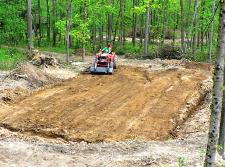 Seemingly millions of canned house plans are available (for a small to large fee) across a plethora of internet websites. 99.9% of these plans have a similar problem – they were designed for a flat lot in suburbia! Yep, they look stunning on a website. Considering spending your hard earned money on one thinking you will save money by using cheap house plans? This would be an equivalent to everyone buying 34 inch waist 36 inch inseam Levi’s. They fit me just fine, but what if you are not 6’5”? Or maybe you do not even like Levi’s?
 Building Codes are a bare minimum standard. Their main focus is on Life/Safety/Hygiene issues and limited structural capacity. Code is not quality. I know of no tradesperson who would build anything for themselves merely “to code.” Building standards are written to protect occupants for a limited time during catastrophic events. It is assumed all structures will be partially, if not completely damaged.
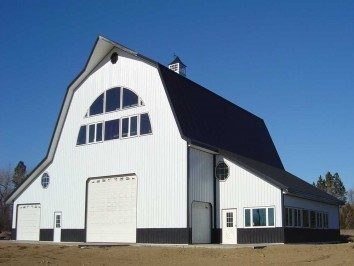 Finding skilled craftsman who are willing to travel to our location ranged from difficult to impossible. Few were interested in a jaunt of 60 miles from Watertown or 100 miles from Fargo. Those who would travel charged extra to compensate for driving time and distance. Transporting building materials and paying for delivery costs more than building near a major city.
 Barndominiums, shouses and post frame homes all fit into a similar category to me. This category heading would be titled, “Living in a Post Frame Building”, although other construction types may be used, post frame is going to give most bang for your investment.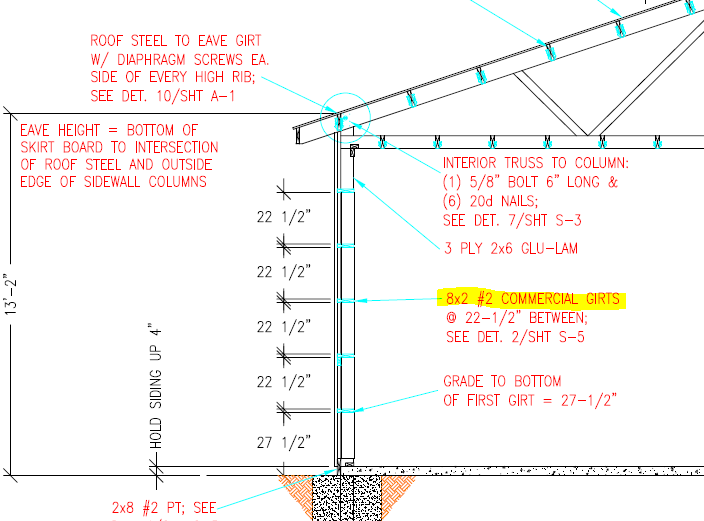
 Thomas, who was owner and president of National Barn Co.’s northeast division, engaged in a pattern of racketeering and deception between 2013 and ’14 that ripped off customers who contracted with his company to have pole buildings constructed, the prosecutors said.
 Why a builder would do this totally baffles me, as stitch screws are not any less expensive (at least not good ones). Of course this building is over a year old, so the builder does not have to do anything about it, by statue!
 In both cases, Oldfield allegedly gave quotes for two separate pole barn construction jobs and requested a deposit for each job. Both victims wrote a check for the deposit and Oldfield kept the money. After taking the funds, he cut off all contact with the victims, and failed to deliver construction of the pole barns.
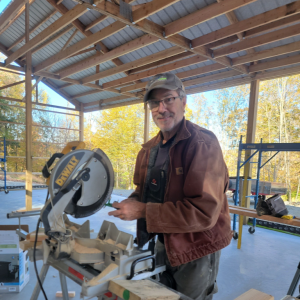 “He took the money and didn’t do a thing,” Van Norman said. “In one of them, a subcontractor came out and prepped the site but after that, nothing happened. At another job, he ordered materials and the materials were delivered to the site, but they sat there forever, to the point where some of them were weathered to the point of being unusable.”
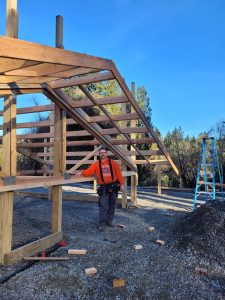 Hansen Pole Buildings is a supplier and a supplier only. We do not construct buildings anywhere for anyone – even ourselves. Our new post frame building addition of 30 feet x 96 feet is being contracted out to a technician, who happens to do erection work for several of our clients. When you order your new post frame building from us this is clearly reiterated in writing and approved by you:

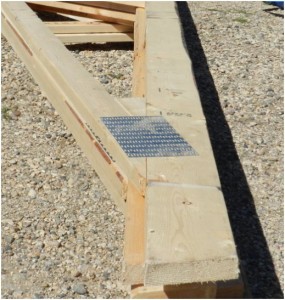

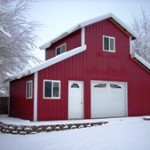 Winter weather can prove to be ugly.
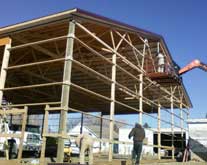 In today’s episode of “How the Stomach Churns” we find Builder Bob (the name has been changed to protect those who probably don’t read my articles anyhow) industriously working away in the wilds of Colorado – where he determines the sidewall steel above a sliding door is four inches too short!
 The phenomenon was first tested in a series of experiments published in 1999 by David Dunning and Justin Kruger of the Department of Psychology, Cornell University. The study was inspired by the case of McArthur Wheeler, a man who robbed two banks after covering his face with lemon juice in the mistaken belief, as lemon juice is usable as invisible ink, it would prevent his face from being recorded on surveillance cameras. They noted earlier studies suggested ignorance of standards of performance lies behind a great deal of incorrect self assessments of competence. This pattern was seen in studies of skills as diverse as reading comprehension, operating a motor vehicle, and playing chess or tennis.
 DEAR POLE BARN GURU: I have some serious issues with a pole barn I recently had built! I hired a general contractor to build it for me knowing it would be a little more expensive but that way if there was any issues it was his responsibility to deal with subcontractors. Well it’s been a nightmare ever since the sub he hired to construct it didn’t set the man door at the right height so when the concrete crew poured the floor they went off the bottom of the man door instead of the garage doors which is the proper way to do it. Well when they went to do the apron they discovered the siding was three inches below where the concrete had to be so they had to cut the wainscot three inches. I decided to start taking measurements! This is a 30×40 building and none of the posts are on center. They are anywhere from 16 inches off to 2 inches off center on an 8 foot span. The roof joists are supposed to be 4 foot span but they are all over the place too! Anyway he’s trying to tell this is ok it’s still structurally sound and I shouldn’t worry about it! Anyway you get the picture. He wants his money and I am refusing to give final payment till I get another contractor to look at it and give me a cost estimate to fix the problems his sub screwed up on. What’s your thoughts on the way I’m handling it? CONFOUNDED IN CABLE
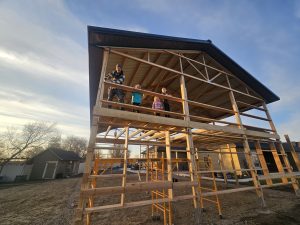 Below is an actual email from a potential client. These were the kind of folks who put huge smiles (all of the way to the bank) on my face when I was a pole building contractor!
 Rick related to me this from the client:
 Sometimes what they say seems completely obvious to them, but makes no sense to you. Of course most of what I say seems completely obvious to me, but makes no sense to my darling bride either.
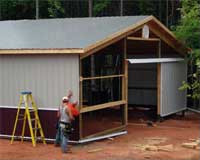 Remember those hours the general contractor will save you on the jobsite? Plan on spending twice the amount of time to find a good general contractor. Do your due diligence and hire someone with excellent references and the professionalism to do what he was hired to do.