DEAR POLE BARN GURU: Is concrete included in price? TRACEY in SUMTER
DEAR TRACEY: No, we do not include concrete in the price and here is why:
Most familiar, as well as most available is the Sakrete® general purpose High Strength Concrete Mix. When mixed per the manufacturer’s instructions, this mix affords a compressive strength of 4,000 psi (pounds per square inch) at 28 days.
The instructions are: Empty the contents into a mortar box, wheelbarrow, or mechanical mixer. When mixing by hand, form a crater for adding water. Add water a little at a time. Avoid a soupy mix. Excess water reduces strength and durability and can cause cracking. A 60 lb. bag should be mixed with three quarts of water, an 80 lb. bag four quarts.
Now the realities of using bagged concrete for post frame building footings….
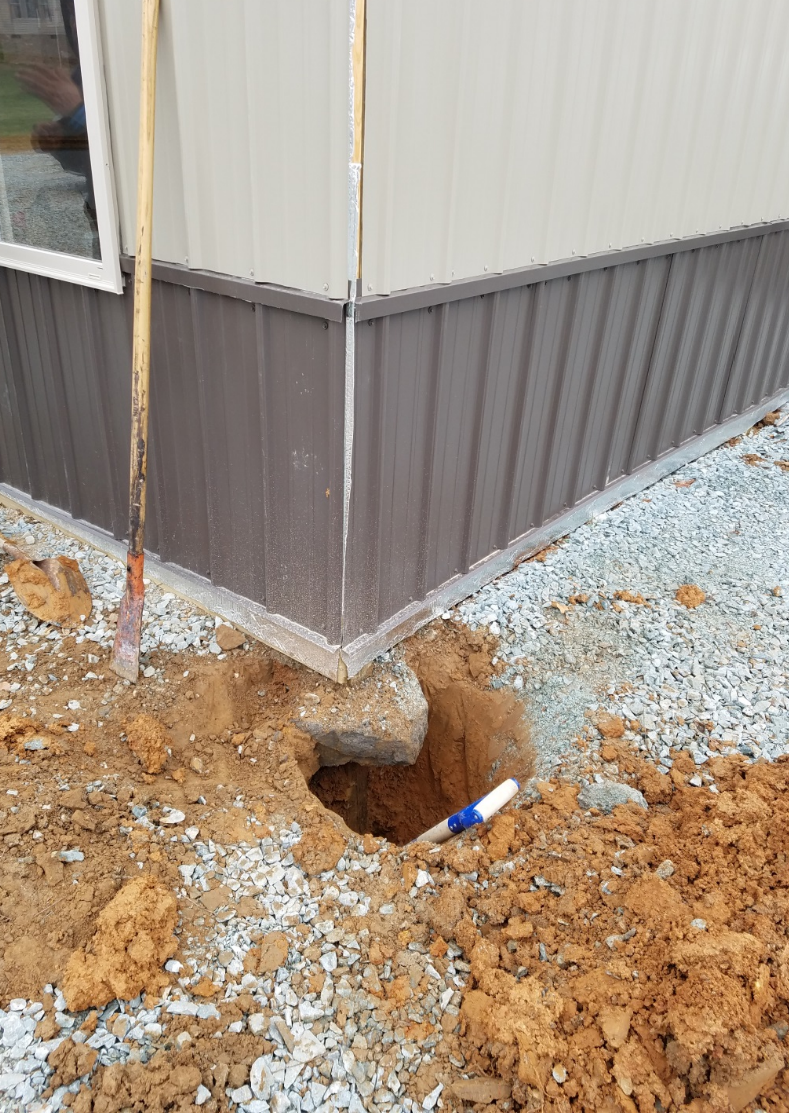
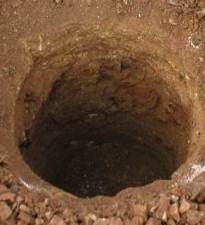
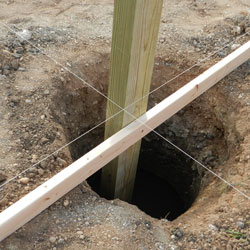 It is not unusual to have concrete encasements of 24 inches or larger in diameter and 18 inches or more in depth, in order to prevent building settling and uplift issues. One hole this size would take 4.71 cubic feet, or about 700 lbs. of concrete! Even a very small building with 18 inches of diameter and depth takes 2.65 cubic feet or about 400 lbs. of concrete.
With either 60 or 80 lb. bags, it is going to take a lot of bags! An average building could easily have 20 posts, and if looking at 700 lbs. of concrete per post, we are talking about 7 TONS of concrete (3-1/2 yards).
Ignoring the huge number of bags involved, there are some other realities.
Ever looked at the pallets of readi-mix bags at the lumberyard? Take a peek, next time. Notice how many of them are broken or leaking.
Due to weight, it may very well mean another delivery and another delivery charge. Trucks do not run for free.
Bags can (and will) break when being handled during delivery, unloading and being moved around the jobsite. It is going to happen, just plan on it.
From experience, lots of projects are not begun immediately after delivery. It is not unusual for delays of weeks, or even months before actual construction begins. Improperly stored, bags can get wet or absorb moisture and become solid before time for use. This equals a total waste of money, other than the chunks of concrete make for solid backfill.
Then there are the builders who insist upon throwing the entire bag (usually including the bag) into the hole. Their idea is ground water will cause the readi-mix to harden. Why does this not resemble the manufacturer’s instructions?
Readi-mix must be mixed thoroughly and evenly. How does mixing over 200- 60 lb. bags of Sackrete® by hand sound? Add too much water (three quarts exactly per 60 lb. sack) and the strength is reduced.
Use too much? As holes are always perfectly round (not), it is going to happen.
Save time, effort and money. Often all three can be saved by having the local pre-mix concrete company deliver concrete for holes (even if a “short load” fee is charged), as opposed to mixing on site.
DEAR POLE BARN GURU: I am building a 36 x 40 pole barn and I’m on a grade that drops approximately 4′ over the span of the building footprint. A home builder friend, a structural engineer, and my concrete guy have recommended traditional foundation with wet set permacolumns, but the builder I’ve contracted with wants to set columns on footers 3′ to 5′ in the ground and not use the permacolumns. The pole barn builder doesn’t think I need a retaining wall and should just have an excavator level what i need with a slope off the back. Seems a retaining wall in the back is better, which my concrete guy will pour, but still recommends foundation to eliminate frost heave. Use for building is car storage and shop with a lift.
Thank you in advance for your time and help. CHRIS in ST. LOUIS
DEAR CHRIS: This reminds me of a joke I once heard – a home builder friend, a structural engineer and a concrete guy enter a bar…….
Oops, kind of off track!
Some of the answer is going to depend upon what you want your yard to look like.
In any case – the actual pad of the building is going to need to be properly compacted (emphasis on proper) so those costs will be fairly even in any case. You’ll want to be reading about proper site preparation and compaction here (it is lengthy): https://www.hansenpolebuildings.com/2011/11/site-preparation/
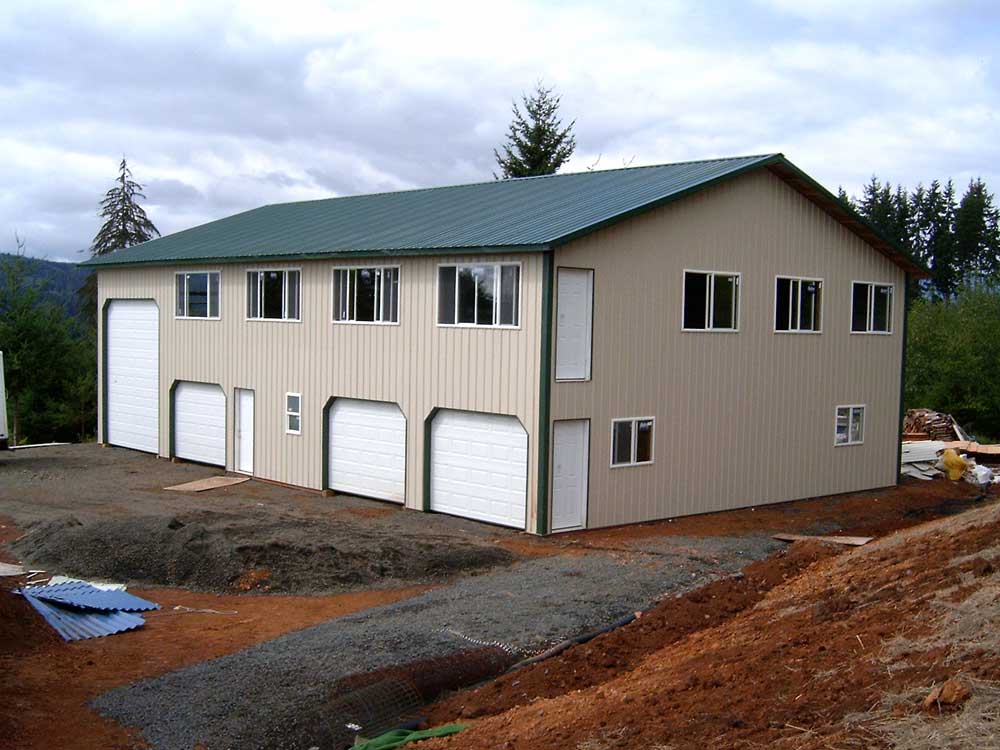 What might appear to be the least expensive would be to just order columns long enough to get the required embedment depth as shown on the engineered plans, then fill afterwards, sloping away from the building. In order to keep the fill from sloughing off, it will probably result in a slope next to your building which will stretch out as far as 20 feet. You could easily invest in several hundred yards of fill!! If you can live with the look, might be the answer.
Building on top of a foundation – this is going to be the most expensive and certainly not the choice I would probably be making. It is also going to be tougher to build upon, due to the height of the walls plus the foundation.
Which leaves – build a retaining wall. I like this idea. Columns do not have to be longer (as long as fill is properly compacted).
By the way – there is no reason for ANY of these versions to frost heave as long as the site has been properly prepared. Read more about how to avoid frost heave issues here: https://www.hansenpolebuildings.com/2011/10/preventing_frost_heaves_in_pole_building_construction/
DEAR POLE BARN GURU: How much is the drip stop application for labor/material? Usually it comes already attached to the metal paneling. Do you figure it by square feet? JOSH in MANKATO
 DEAR JOSH: For materials you are going to be looking somewhere in the neighborhood of 53 cents per square foot of roof surface. As a builder, if you are anywhere it is typically windy, I am going to give you a decent discount on my labor for having invested in it, because I don’t have to fight rolls of insulation flapping in the breeze.
 DEAR KURT: Thank you for your investment in a new Hansen Pole Building – be sure to send me lots of progress photos during construction (and of course ones when it is all complete).
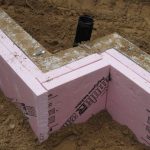
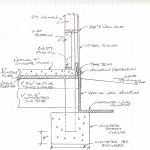 DEAR GREG: Any possible movement would come from either inadequately compacted or loose soil below column footings, inadequate footing diameter, or frost heave. To prevent frost heave, columns footings should be placed at frost depth or deeper and perimeter of slab should be insulated vertically with rigid insulation. In your climate zone, this would entail a four foot ‘tall’ R-10 insulation board. Install on inside face of pressure preservative treated splash plank, with top of insulation even with top of concrete slab. As an alternative, you can insulate slab perimeter per Frost-Protected Shallow Foundation requirements found here (note, slab edge does not have to be thickened or have a stem wall): https://www.huduser.gov/publications/pdf/fpsfguide.pdf
 DEAR POLE BARN GURU: Hello Guru! We were wondering if the USDA Rural Development program allows for the construction of a pole barn home? KIRSTYN in LANSDALE
 DEAR POLE BARN GURU: I have a question. I have a pole and half the posts are heaving up. The old owners poured a slab inside the pole barn. Could I build a cinder block wall 2ft tall. Jack up the building. Remove old posts out of the ground and set the pole building on top of the wall?
 DEAR POLE BARN GURU: Do u have any plans for a house/barn combo? JOAN in LAKE PANASOFFKEE
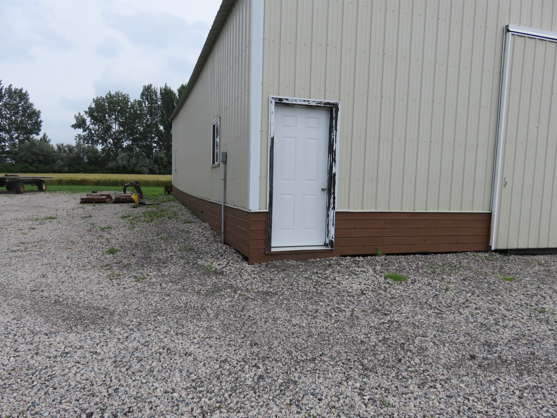
 “Poll barn door two 12 foot slider’s how to prevent frost heave s can’t open or close do I dig out under them and pour concrete or put 2 inch styrofoam any ideas?”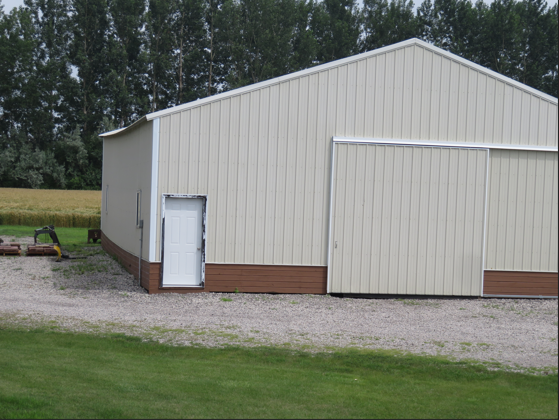
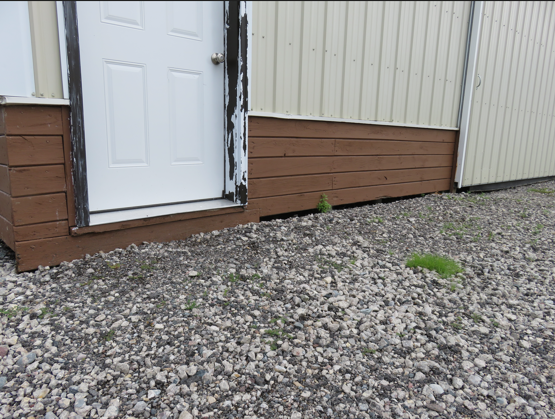
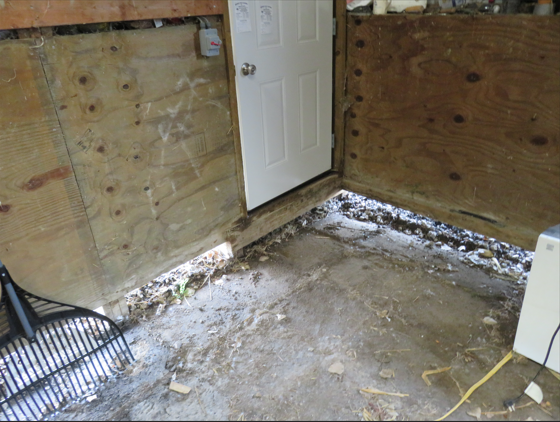
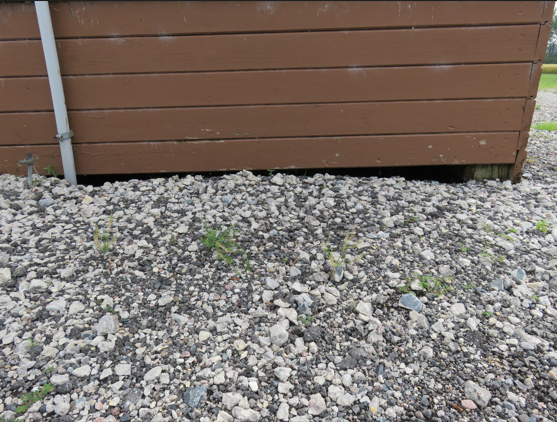
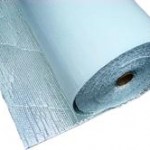 DEAR POLE BARN GURU: I recently moved into a house with a 40×30 pole barn (wood post and wood trusses) with a metal exterior. The building has a reflective foil radiant barrier between the metal and wood structure. It is extremely hot in the summer and cold in the winter. I want to insulate and cannot afford spray foam. I also don’t have the ability to remove the walls to remove the foil barrier that way. I do have some Silvercote insulation that has an attached vapor barrier. It is just a fiberglass roll insulation that has an attached vapor barrier to it. It is sold around here for use as insulation in metal buildings. I was given enough to insulate the whole shop from someone that had left overs. I would like to install this insulation to help with temps in the shop. I have tried to research to get an answer on the best way to go about this. The shop builder said just put it up but I feel that would create a double vapor barrier. Is my best route to cut the foil radiant barrier out and then install the fiberglass insulation with vapor barrier facing the interior of the building? This would basically take the foil barrier out and install the fiberglass against the metal with the attached face vapor barrier to the inside of the building. I want to make sure I do it right. Thank you. DAVID in OKLAHOMA CITY
 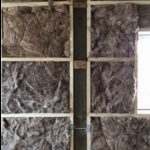 DEAR DAVID: If you are dead set on using this Silvercote insulation then you should cut out any foil radiant barrier. You never want to have a double vapor barrier situation as any trapped moisture will have no method of escaping. Downside of this is you do not have a Weather Resistant Barrier (aka housewrap) between framing and siding. An option to consider would be to resell your metal building insulation, then use unfaced Rockwool batt insulation, as it is unaffected by moisture.
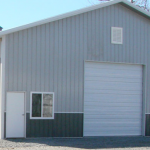 DEAR POLE BARN GURU: I plan to build a 28×48 metal pole barn, concrete floor, 12′ eave with 8/12 pitch. Barn will have 6 3×4 windows, and two 10×10 roll doors, one roll door on each gable end. For now, the roof will be insulated with 3in closed cell foam. I plan to insulate the walls down the road with rigid foam board. The building will not have A/C. Question: Do I need vents or exhaust fan in the gable ends of the roof with the high heat/humidity of Alabama? There will be no ridge vent or soffit vents. I may not have the building open every day, either. Thank you. JASON in MONTGOMERY
  DEAR JONI: One 4th of July we downhill snow skied Mount Bachelor’s summit before lunch, then hit The Deschutes River for white water rafting. We have provided hundreds of engineered post frame buildings to our clients in Oregon, so we know your area well.
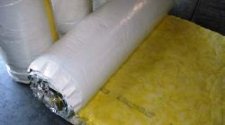 DEAR POLE BARN GURU: I work in commercial buildings a lot, that have similarities to pole barn design. Some are wood and steel, some are all steel framed. But none of them have spray foam, they’re either rockwool or fiberglass insulation. And ALL of their roofs are closed dead spaced with no venting at all. In lieu of your reply, how do they get away with this? Why can’t I emulate what they’re doing to some extent? Thanks again! DAVE in GALES CREEK
 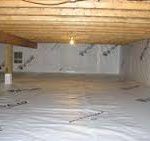 DEAR ROSS: You are correct about where moisture is coming from – and it is made even worse in Winter, when ground outside of your building is frozen and inside your building is where all ground moisture is trying to escape (basically think of your building as being a cork pulled out of a genie’s bottle). While pouring a concrete slab on grade of a vapor barrier would be your best (and permanent) solution, concrete is costly. With this said, my best recommendation would be to remove top two inches of dirt inside of your building, making sure there are no sharp rocks projecting up above surface. Place a 15mil black vapor barrier across entire floor, overlapping seams by 12 inches and taping them tightly shut. Run vapor barrier up onto splash planks on walls (if possible) as well as sealing to each column. Cover vapor barrier with two inches of clean sand. You may need to mechanically dehumidify, in order to fully resolve your challenges.
 DEAR WESLEY: Post frame buildings “work” due to their skin. Placing openings, without approval from your building’s engineer, could result in catastrophic structural failure.
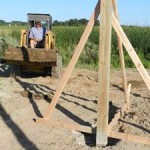 DEAR TONY: Most important for avoiding frost heave is having a properly prepared building site:
 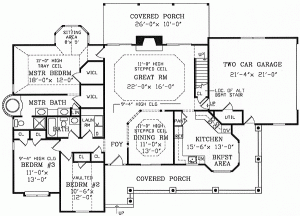 DEAR POLE BARN GURU: What do you charge to take my floor plan and send me engineered drawings? SHANNON in JONESBOROUGH
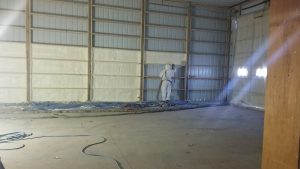 DEAR POLE BARN GURU: Hello! I have recently purchased a pole building that is not insulated & It does not have the vapor barrier/plastic installed between the wood framing and the sheet metal. We would like to insulate this building. We are thinking spray foam because I have heard you can apply it directly to the steel. Do we have any other options for insulating this? Any advice is greatly appreciated. Thank you!! KRYSTA in SPOKANE
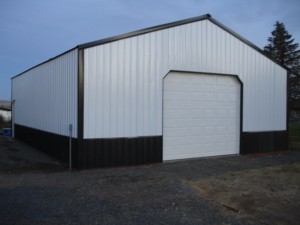 DEAR POLE BARN GURU: I need to pour a concrete sill at the 18’ wide entry to my pole shed in South central Wisconsin. The interior of shed is compacted crushed limestone, the apron leading up to it will be asphalt so a concrete sill seems like a good idea to protect asphalt edge. I can’t find any advice online so I hope you can help me out with your expert thoughts. First, good idea? Second, thickness. It would be about 12” wide. The base is 30 years old, thick and well compacted. Any help would be greatly appreciated. Thanks for your time. JAPH in WISCONSIN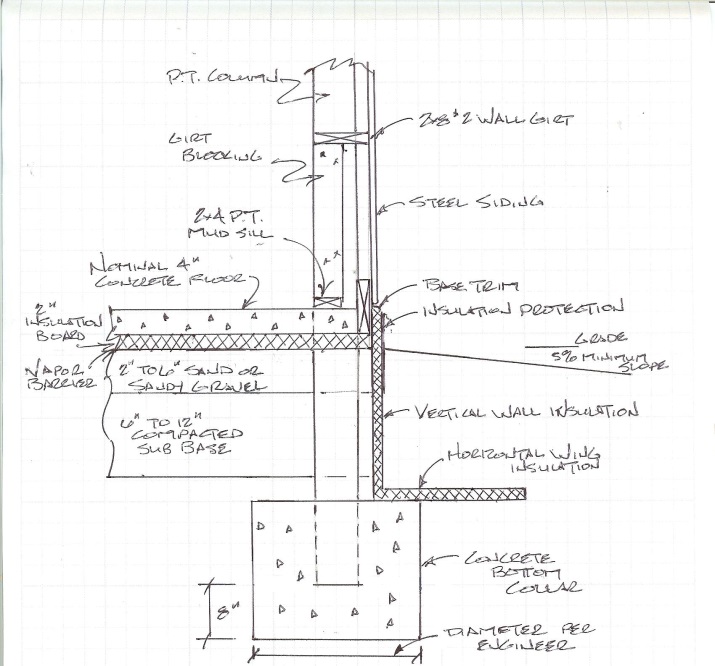
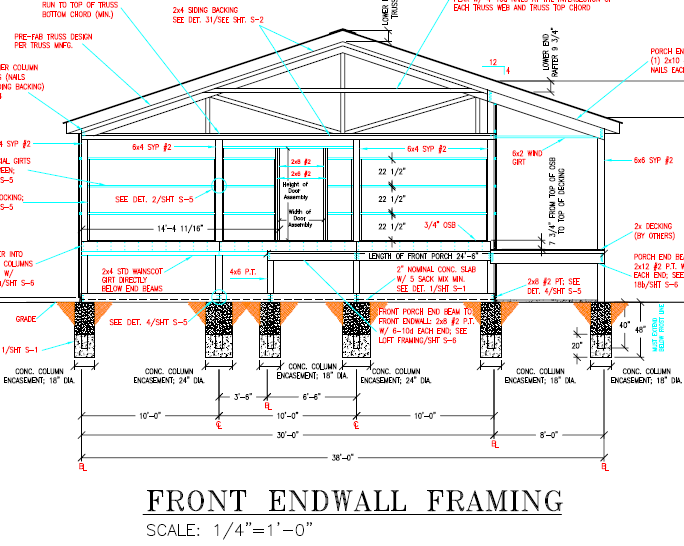
 Everyone says to put on single or double bubble before putting down roof metal but if I do that how do I insulate the ceiling because then I will have a vapor barrier above the insulation. DAVID in KIRKWOOD
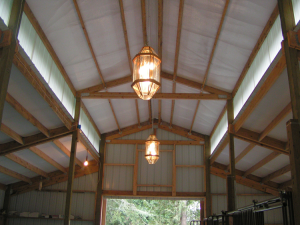 DEAR POLE BARN GURU: I have a pole shed 1972? with skylights that need replacing where do I find . DAVE in COLFAX
 Thank you, CHRIS in NEW HOLLAND
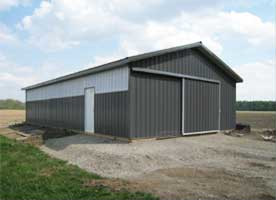 DEAR JOHN: Ground water is going to be an issue no matter what you do. Frost walls are going to be very costly (
 DEAR WILLIAM: With proper structural design, probably. There are some downsides of this application, however. You will be extremely limited in your ability to place anything along building sidewalls. Care will need to be given in opening vehicle doors so as not to smash them against each other, or sidewalls.
 DEAR ANDREA: My father’s family came to be United States citizens after arriving from Norway prior to 1900, so I have always had an affinity towards all things Norse. (A little snippet of my Norsk history here:
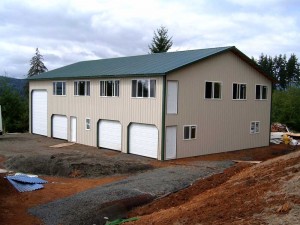 DEAR LONNIE: A consideration would be to design entire building to be able to be climate controlled, as you may decide to expand your office space, or building may be re-purposed in future and require some or all of remainder to be conditioned.