Pole Barns Verses Red Iron Steel
Reader PAUL in GEORGETOWN writes:
“What advantages or disadvantages are there between your pole barns versus the red iron steel barns? The end use is living space and shop.”
Here are some thoughts comparing our fully engineered post frame buildings to red iron (PEMBs – Pre-engineered Metal Buildings):
 A PEMB requires wood framing a home inside of a building shell. Huge steel frames must be hidden, wrapped and thermally broken. Wood is an effective insulator and with bookshelf wall girts and raised heel roof trusses can easily be super insulated.
PEMBs tend to work within defined standard dimensions. For pennies per square foot of investment difference, our post frame buildings can be fully customized in width, length, height, complex shapes and roof slopes to exactly meet your wants and needs.
PEMBs require foundation bolts to be precision placed and bolt holes correct, otherwise expect field structural steel cutting, welding or drilling. Post frame is extremely forgiving with no cutting torches or welding required.
PEMBs require you to hire a third-party engineer to design a foundation plan. Our post frame buildings include engineered foundation plans. PEMBs require significantly more concrete for foundations and may require costly reinforcement requirements in slabs on grade.
Our post frame buildings allow for easy application of alternative roofing materials (shingles and even tile!) as well as a plethora of siding options. If you have seen it on any other structural system, we can do it in post frame.
Our building shells can be erected without having to wait upon a slab-on-grade to be poured. They can easily be built on full, partial, or walkout basement, or have crawl spaces incorporated. These can include precast or poured concrete, ICFs, even permanent wood foundations.
Post frame lends itself well to DIY assembly, unlike PEMBs, no heavy lifting equipment is required.
While insects do not eat steel, steel in contact or close to grade can and will rust. All of our pressure preservative treated wood is a minimum UC-4B rated and Code approved for structural in ground use. Not convinced? We can provide your building with ICC-ESR Code approved wet set brackets for mounting columns above ground.
Any fully engineered structural building system will support climactic conditions as indicated on engineer sealed plans. There is no legitimate claim for excess capacity beyond what has been engineer certified. Our post frame buildings can be engineered to withstand design wind speeds in excess of 200 miles per hour and snow loads over 400 pounds per square foot. We can provide designs up to three stories and 40 foot sidewall heights without a need for fire suppression systems (except where such are mandated by law).
PEMBs do shine if you require a clearspan width in excess of 102 feet.
Your Hansen Pole Building is designed for an average physically capable person, who can and will read and follow instructions, to successfully construct your own beautiful building shell (and most of our clients do DIY – saving tens of thousands of dollars). We’ve had clients ranging from septuagenarians to fathers bonding with their teenage daughters erect their own buildings, so chances are – you can as well! Your new building investment includes full multi-page 24” x 36” structural blueprints detailing location and attachment of every piece (as well as suitable for obtaining Building Permits), our industry’s best, fully illustrated, step-by-step installation manual, and unlimited technical support from people who have actually built post frame buildings. Even better – it includes our industry leading Limited Lifetime Structural warranty!
 Nice to see jurisdictions enforcing IECC (International Energy Conservation Code) requirements, as it will result in more energy efficient structures. In Ouray County, you are in Climate Zone 6B. This requires ceiling R-49, wood frame walls of R-20 plus R-5 (or R-13 plus R-10) where second value is continuous insulation and slab edges to have R-10 four feet deep.
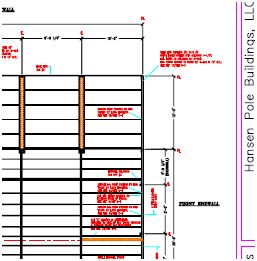

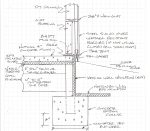 MYTH #8. THERE ARE NO FOOTERS IN POST FRAMES
 This article is so lengthy it will be fed to you in three installments. For your reading pleasure I present here Myths #1 through 3.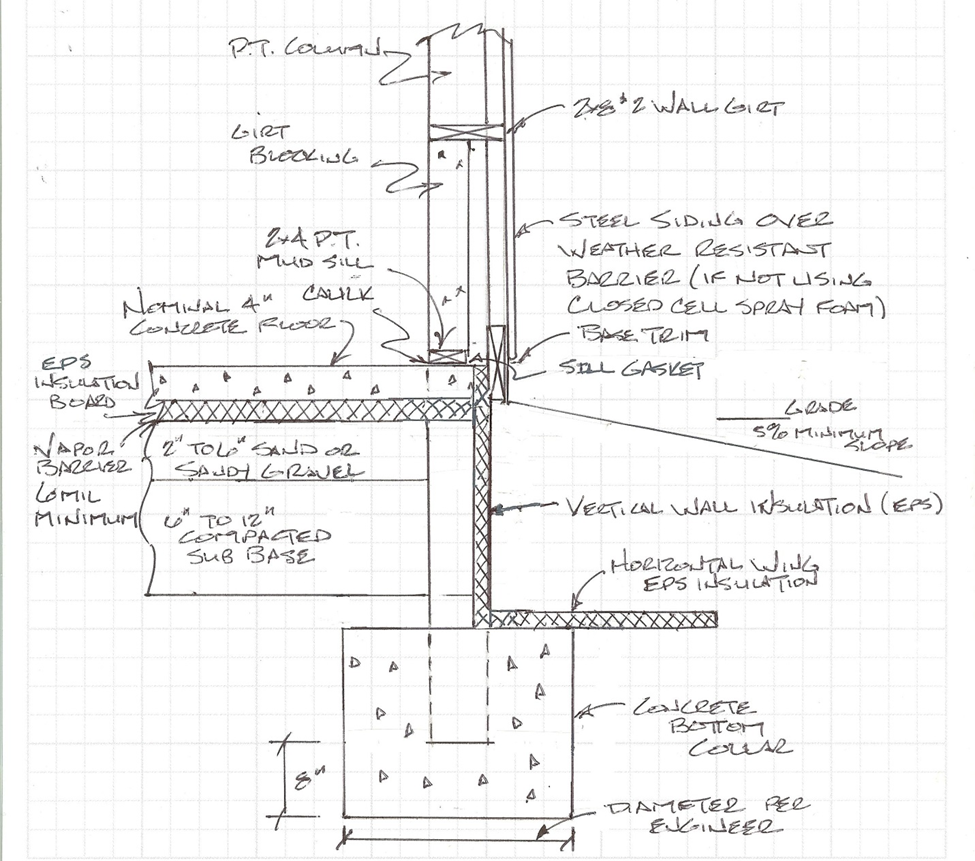
 “These metal structures can look fancier, but we do not feel they are consistent with our current housing stock,” Richison said. “We have concerns they will not comply with the building code as far as safety and structural integrity because they are not built to the construction standard of a house.”
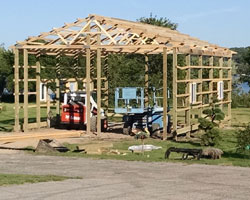
 Although post-frame construction has been popularized thanks to pole barns, the truth is they are not your only option. Post-frame construction is nowadays used in many cases. For instance, you can build a pole barn garage – the
  2000
2000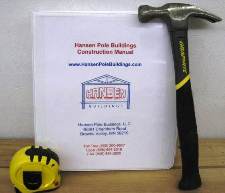 Sidebar – for those who are interested in acquiring one of these manuals, they are available by reaching out to
  How to best participate? Become an expert and let people know you are one – put it on your website, business cards, any promotional literature or videos. Residential post frame construction is evolving rapidly as people want to leave cities and flee to low tax, less governmental intervention regions of our nation – bringing forth a rise in what are affectionately known as barndominiums. Post frame homes are most often steel sided and roofed as this presents your most cost effective and durable option. However any types of siding and roofing may be utilized. Be on your lookout for rural properties where people can build on anything from a large lot to multiple acres, as there are plenty of folks looking for these parcels.
 “My name is George xxxxxx, I am currently a thesis student at Auburn University’s Rural Studio, located in Hale County, Alabama. I am looking into pole barn // post frame construction as a method for quickly building strong homes. Hansen seems like it has more experience in this methodology than most in the nation, where most contractors are afraid of diverging from traditional stick-frame construction. I am particularly interested in the structuring of your residential homes (the retirement home in Decatur is beautiful), and your opinion on steel vs. wood roof framing. If there is an expert who would be willing to spend some minutes this week answering a few of my questions it would be greatly appreciated! Also, if you have more questions about the Rural Studio I would be happy to answer them to the best of my ability.”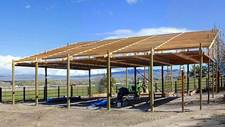
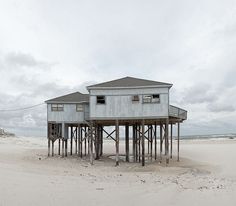
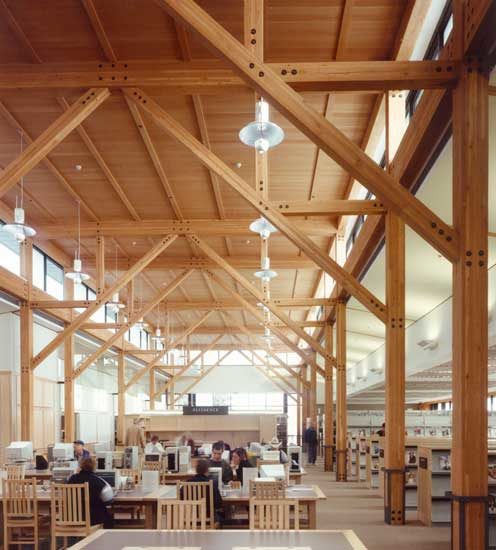
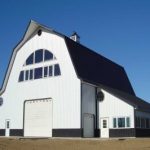
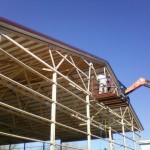
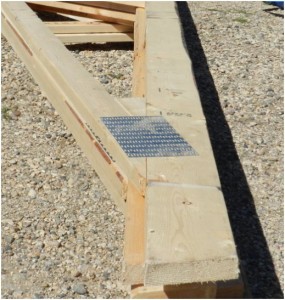
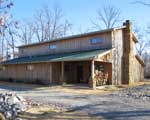 For the benefit of the unenlightened in West Frankfort (or anywhere else in the United States), “pole barns” are actually more technically “post frame buildings” and their construction is covered as Code Conforming in the International Codes.
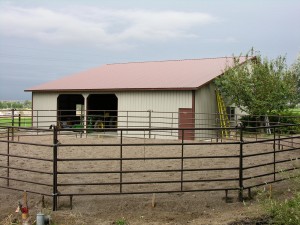 In the story Steve Steir, president of the Michigan Barn Preservation Network is quoted, “Barns are a symbol of peace and quiet, you can see the bones of the building when you walk inside. A barn is the most honest piece of architecture.”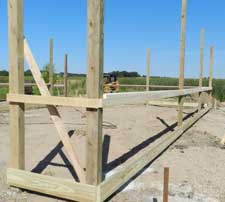
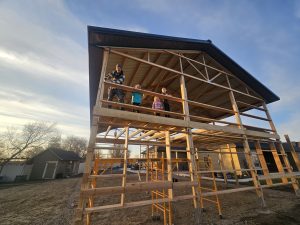 Several key benefits of constructing pole buildings were noted by those who participated in the research, including its low cost compared to traditional building methods, quick speed of construction, adaptability—meaning it lends itself well to different designs and end uses.