This week the Pole Barn Guru answers reader questions about pricing on a 2 bed 1 bath with 600-650 square feet, and a shed. The use of inside closures to seal off gaps before spray foaming walls, and if we had a floor plan template used on a 30X32X20 barndominium.
 DEAR POLE BARN GURU: If I want a 2 bedroom and 1 bath like a 600 to 650 square footage! What are some of the prices? Also can we see one of these sheds? CHRISTIE in MILLBURY
DEAR CHRISTIE: Our floor plans specialists could custom design this combination for you (https://www.hansenpolebuildings.com/post-frame-floor-plans/). Be aware, unless this is an ADU (Accessory Dwelling Unit), most jurisdictions require primary residences to have a larger footprint. You should reach out to your local Planning Department to confirm. Pricing can vary greatly, depending highly upon selected doors and windows.
DEAR POLE BARN GURU: In my recently built pole barn I had the idea of sealing off the base where the metal siding connects with the flashing and the bottom girt with closed cell spray foam. The idea behind this is to prevent air gaps and block insects, etc. But would this be a bad idea if I decided to insulate the walls? In other words if I insulated the walls would I want to keep the air gaps to ventilate the wall cavity and prevent condensation? Thanks, GREG in FAIRBURY
 DEAR GREG: Best method of sealing is likely to be to place form fitted Inside Closure strips between bottom of steel siding and base trim. This should be able to be accomplished by removing screws from bottom of steel panels, slide closures in from inside, and reinstall screws. You can then add closed cell spray foam (closures will keep spray foam from oozing out bottom of panels) above closure strips. Ventilating a wall cavity typically results in reducing insulation capacity and can result in increasing damage should a fire occur. To minimize possibilities of condensation, have a well-sealed vapor barrier on interior face of your wall insulation.
DEAR POLE BARN GURU: I see you guys have a 30X32X20 barndominium. I was wondering if there was a floor plan template, or any other pictures I can get besides the standard one? RYAN in BEL AIR
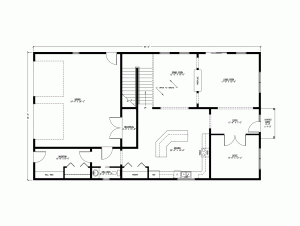
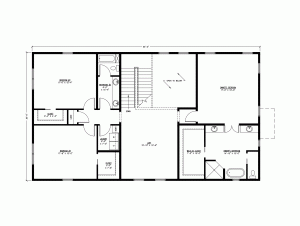
DEAR RYAN: Unfortunately, this client had us design building around his own floor plan/sketch and did not use our Floor Plan Service, so we don’t have anything “official”. However, Mason in our office (Mason@HansenPoleBuildings.com) was actually Building Designer who worked with client on this building so has his drawing we used.
Second-floor layout is his living space. Below this living space is a 32×32 Garage with (2) 9×7 garage doors. This is all attached to a second 18’x32’ building to house an RV.
If you’re interested in a building similar to this, we do offer custom in house floor plan services where you can work one on one with a floor plans specialist to create your own ideal dream floor plan. https://www.hansenpolebuildings.com/post-frame-floor-plans/
 DEAR POLE BARN GURU: Insulation questions. Lexington KY Zone 4. Residential req. Roof r38, walls r12. I’m planning a hybrid steel truss 36x48x12 with 6/12 pitch. 1/2 unconditioned garage and 1/2 living quarters. I have 2000+ sq ft of new 3″eps already on hand that I picked up for free. Here’s my idea. I’d really appreciate feedback. Roof from outside to inside. Metal sheeting, horizontal furring strips, foil reflective (double bubble), 3″eps. For living quarters: 2×8 purlins filled with rockwool or other, smart vapor barrier, T & G pine ceiling. Walls same deal except exchange 3″eps for 3″ compressed fiberboard (compressed fiberboard mostly because I can get it for 5.60/sheet 4×8 x1″ r4.0) ERV considerations? Thank you DERICK in LEXINGTON
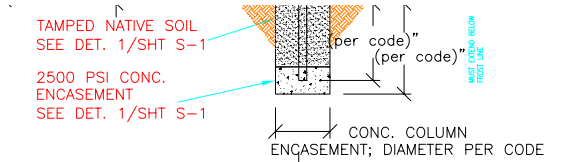
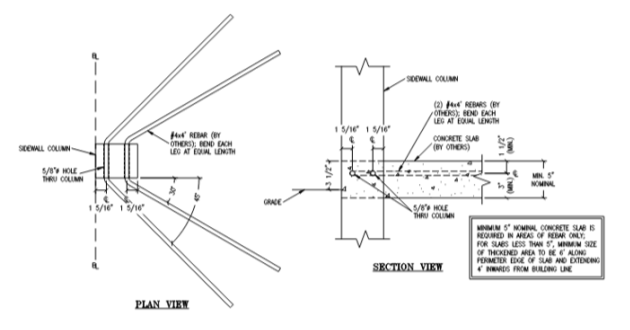
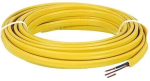 DEAR JOHN: Very little drilling, if any, will be needed for holes in order to run electrical wires. Wall framing (girts) extend or are placed so as to leave a 1-1/2 inch space between outside of wall columns and siding.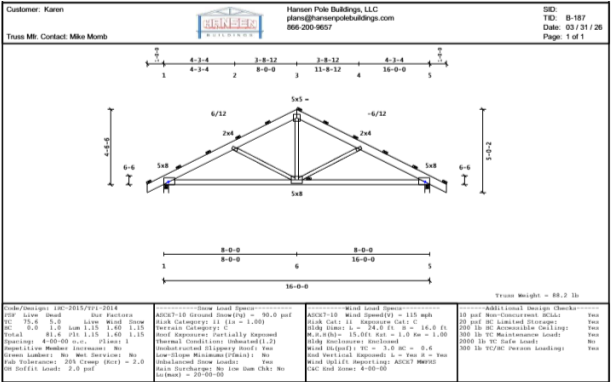
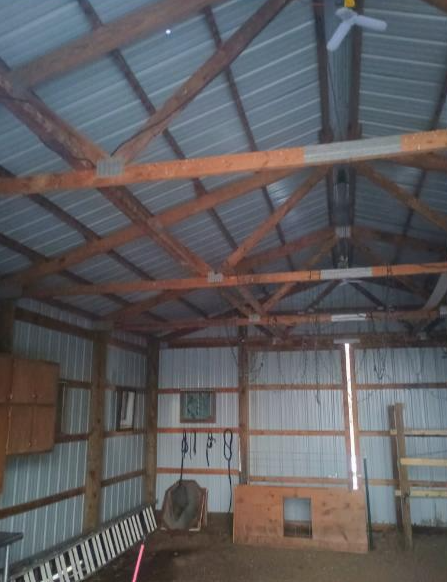
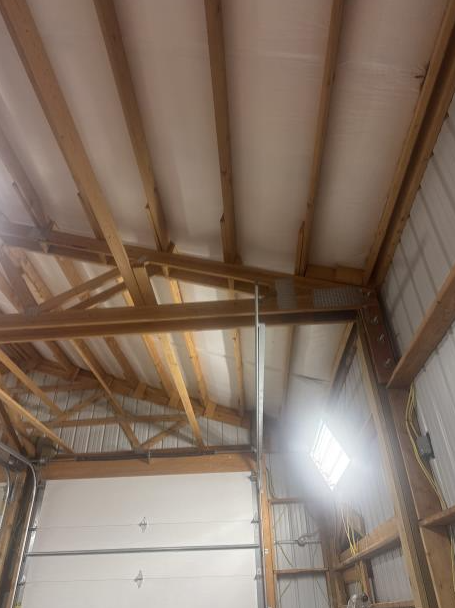
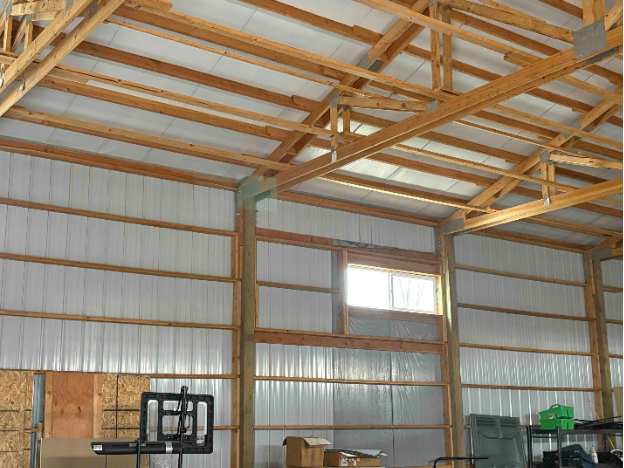
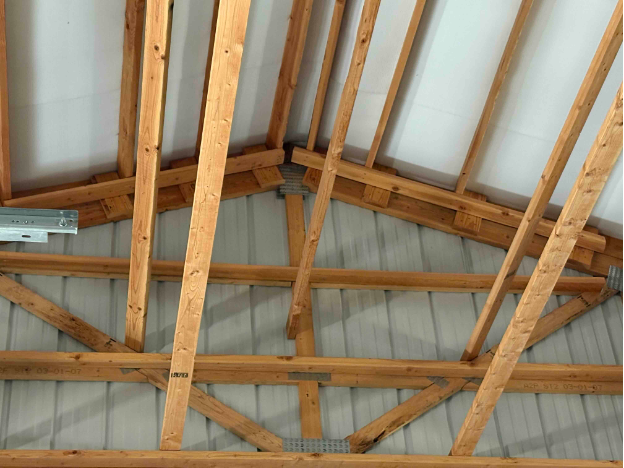
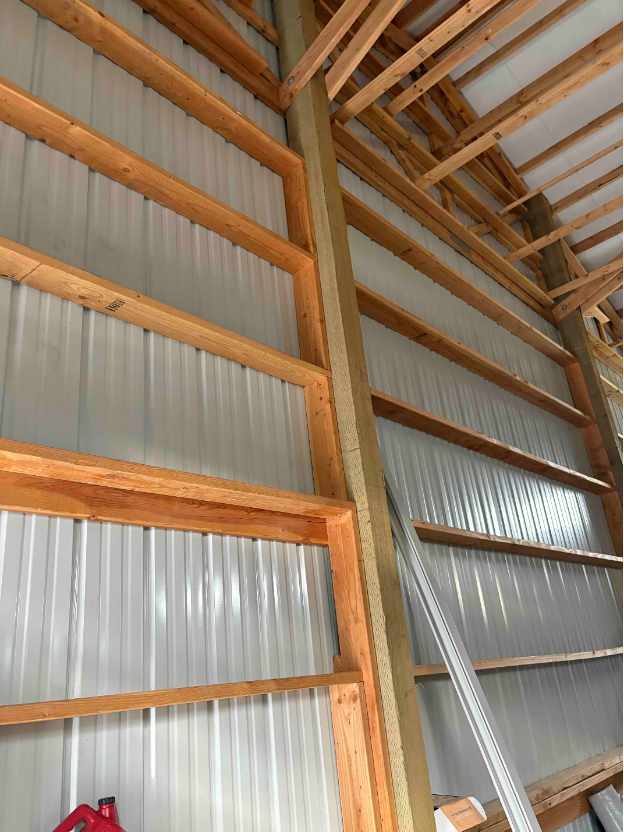
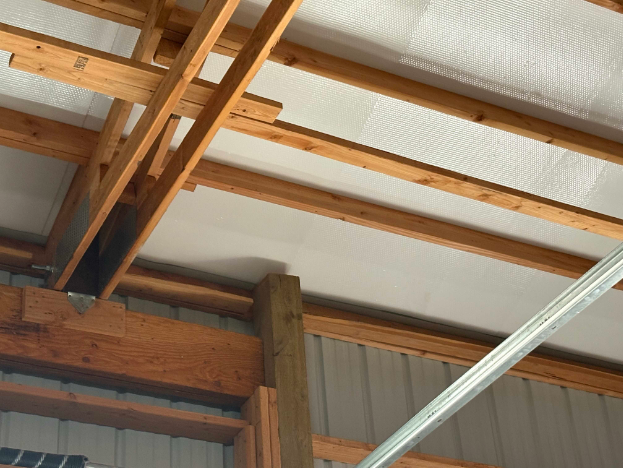
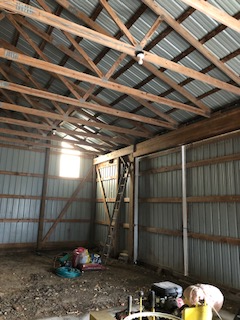
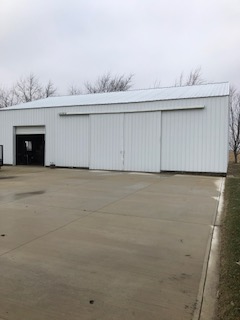
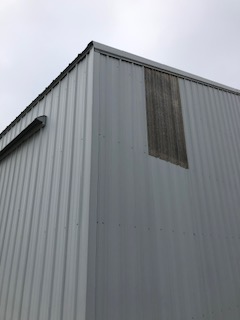
 DEAR POLE BARN GURU: We have a pole barn it was purposely built to have an apartment upstairs; it originally was a stable below. It’s all living quarters now. We have had issues with the steel roof. We are switching to class 4 shingles. The building has no eaves as it has porches off both sides. We are working with a roofer. They are suggesting we use some ridged vent at the lower edge of the roof, by cutting a notch in the edge and installing it under the shingles and decking. That’s my understanding. Also, it will have a full ridge vent. The steel was applied on decking with tar paper under it. We have had leaking and condensation with it, as it is. Just wondering if you have any other ideas, or if the ridged vent at the lower edge of the roof will be a problem? It has 16″ deep trusses with blown in insulations above the sheet rock ceiling. Thanks for any input or ideas. JENNENE in RAPID CITY
 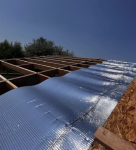 DEAR JUSTIN: In most instances a reflective radiant barrier is a waste of your hard- earned dollars. They can be (when properly sealed) an excellent vapor barrier, however using a perforated product takes away even this as a possible benefit. Walls – from out to in…. Siding, Omnidirectional housewrap over bookshelf wall girts, fill entire cavity with Rockwool insulation batts, well-sealed clear poly vapor barrier, interior finish. Roof – Order raised heel trusses (at least an inch taller heel than depth of blown in fiberglass (not cellulose) insulation). Order roof steel with an Integral Condensation Control factory applied. Vent eaves and ridge in correct proportions. No ceiling vapor barrier.
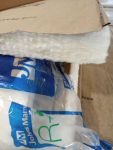 DEAR POLE BARN GURU: I have an existing pole barn on property that I would like to insulate. I would like to steer away from spray foam but am worried as there is no Tyvek or vapor barrier on external side. What are my best options to void off any moisture issues and create a well insulated wall. JAMES in LAKE VILLAGE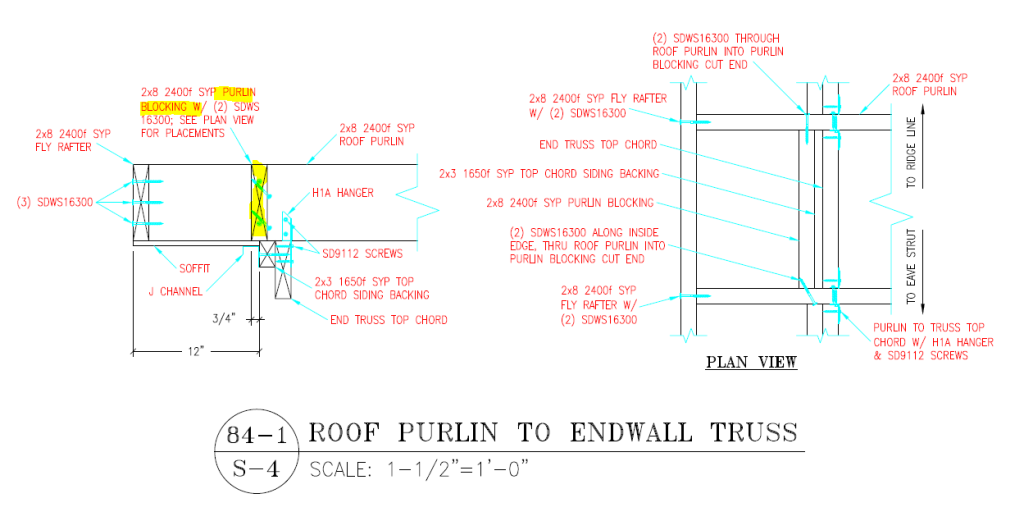
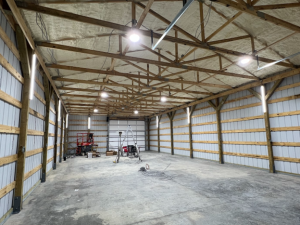
 DEAR ROBERT: All of these recommendations are based upon meeting energy code requirements for conditioned buildings. Washington State will be a stickler for these.
 DEAR POLE BARN GURU: I have an 18×20 metal building (my house) that’s covered with spray foam insulation at 1.5″ on the walls and 2″ on the inside roof. The entire space will be conditioned. I am now reading that I may need to ventilate the space. I thought the purpose of the spray foam was to make it air-tight as a closed envelope system. So, can you explain what I need to know about venting? Also I have a large attic fan I am wanting to install in the wall. It has louvers on it to hopefully seal the air and water out. I plan to use it to blow hot air out when I come home instead of cooling while at work. Then turn on the AC. Also plan to use on days that’s it’s not terribly hot as a method of cooling the whole house like my grandparents did. I live in East Texas so I won’t be able to do this too often. Is this ok or should I scrap this idea? Can I expect the louvers to seal good enough? With this would I need a mechanical ventilation system? Thank you for your awesome help. I’ve been reading your advice for years. CINDY in TYLER
  DEAR POLE BARN GURU: What size posts should be used for 30′ x 40′ x 10 with 6/12 pitch in southern lower Michigan??? Storage/ garage / shop. STEVE in MARSHALL
  “I read your blog often and I truly appreciate the wealth of knowledge you openly share. I am in the process of starting construction on a hybrid steel shop that will house a small apartment that the wife and I will move into once its finished. We will sell our current home and then build a smaller house adjacent to the shop. 50 X 80 with 24′ wide mezzanine on one end. My questions are centered around wall/roof construction as well as proper insulation. Roof: I plan to install a standing seam roof with ice/water shield over 5/8 plywood. As you are aware, with hybrid steel it is hard to ventilate the roof with this type of construction. This downfall didn’t outweigh some of the benefits so this is what I am stuck with. Would like to understand some insulation options. Note: I do have the building designed to handle the loading of a couple of cupula’s and have considered making these passive and active ventilation points. (Exhaust fans with some louvers that I have yet to get the details figured out on)Walls (2 options): (Note: I prefer not to plan or have to always be fully conditioning the shop to 72 degrees…..I plan to have that ability by mechanical means but I don’t want to consistently have to be conditioning that much space, therefore I think i prefer the building to be able to breath out to the perimeter. I realize this may be tricky between the roof type and wall type)Option 1: metal siding – would like some input on wall and insulation construction based on the above notes of conditioning. Option 2: Hardie board vertical board and batten walls. Same as above, would like your input. There will be components on the first floor and second floor that make up the apartment space. Our approach on insulation and wall construction may change within those enclosed spaces may vary as they will be conditioned separately from the open shop space. Hope you can help shed some light on this approach and again thank you for your time and knowledge. Thanks!”
 Thank you for reaching out to us. I also qualify for those senior discounts and fully understand stair issues. When we built our own shouse (shop/house) in Northeast South Dakota 15 years ago we went with two stories and my lovely bride insisted upon having an elevator (we actually now have two of them).
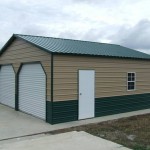 DEAR POLE BARN GURU: When installing horizontal sheeting, does the top sheet always cover the bottom sheet when joined? GARY in EUFAULA
 DEAR POLE BARN GURU:
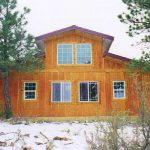 The structural system of a post-post frame home, its engineered plans and foundation are all going to prove to be less expensive than stick frame. Everything else is going to be pretty much the same – cabinets, fixtures and floor coverings do not suddenly become less expensive just because they were in a post frame building.
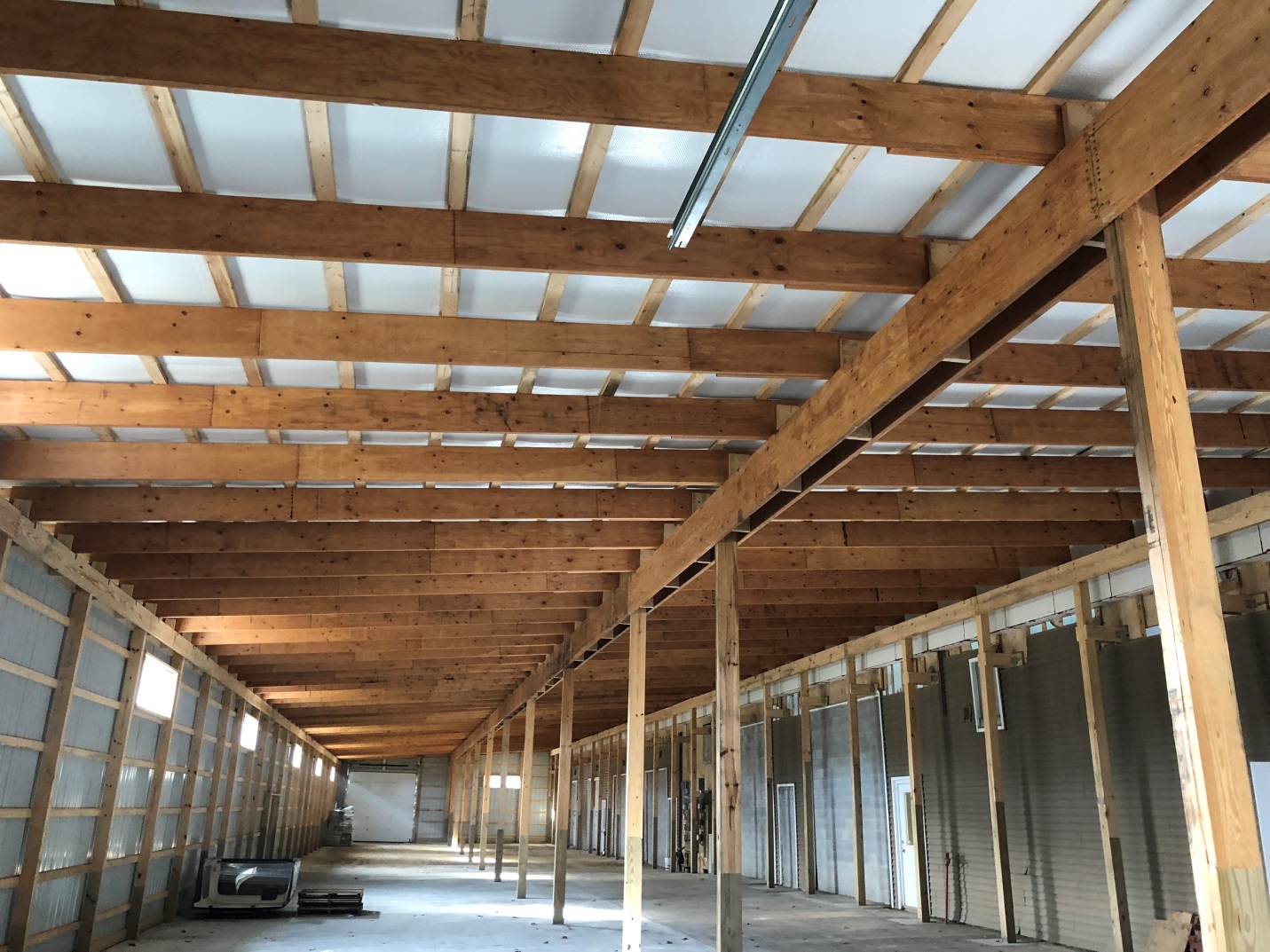 DISCLAIMER: This is NOT a Hansen Pole Building
 Welcome to Ask the Pole Barn Guru – where you can ask questions about building topics, with answers posted on Mondays. With many questions to answer, please be patient to watch for yours to come up on a future Monday segment. If you want a quick answer, please be sure to answer with a “reply-able” email address.
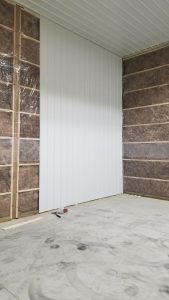 TextraFINE® Post Frame insulation is made from inorganic silica sand which is formed into long textile-type glass fibers which are bonded together in random orientation by a stable thermosetting binder. This process produces unusually strong, resilient insulation which will return to full thickness following compression.
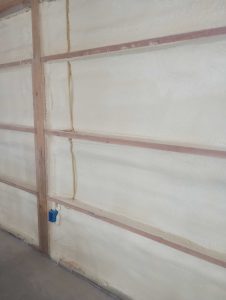 Foam board insulation is commonly placed against the steel building siding, between the girts of exterior walls. To prevent air infiltration, place rigid insulation boards tightly together and seal the seams with tape or caulk. This practice may worry some in cold climates since the foam board may act as a second vapor diffusion retarder. Studies have shown, condensation rarely occurs in these areas unless something else is seriously wrong with the wall assembly (like massive uncontrolled air leakage into the walls from the building). If the assembly is constructed correctly, the inside surface of the foam board stays warm enough to keep water vapor in its gaseous state long enough for it to escape.