Working With a Building Official for footing designs
Long time readers have read me opine on how Building Officials are our friends: https://www.hansenpolebuildings.com/2012/04/i-like-building-officials/
One of our clients recently received this email from his Building Official and shared it with me (red added by me):
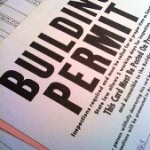 “The Town of xxxx stopped plan review on your project because pole buildings with the type of foundation that was called out on your plans have a track record of failing in a short period of time in this area and the soil conditions that exist at your location won’t allow piers to be dug as called out in the plans The ground is full of rock. It was our intent to not have you try and build something that was not going to work and cost you a lot of money. With a frost depth of only 18” “T” foundations are the acceptable method of construction in that area and should be a lot less expensive.”
I responded asking for more explanation of wording in red, and heard back:
“We have a few pole barns in xxxx that are much larger in size and in areas that will allow piers to be dug without interference of large rocks below grade. The pier design that they used allows the wood post to sit on a gravel base so any water that might drain down along the side of post after the wood shrinks from age is allowed to drain away.
They also pour concrete up to 3” above the top of the pier and slope the concrete away from the post. Your design traps water at the bottom of post and allows the water to be wicked up by the end grain of the post and promote rot. Although the building codes does allow treated wood foundations to be buried we strongly discourage the use in our jurisdiction.
Thanks for your understanding.”
Thank you very much for your timely response.
I am probably remiss in not having offered a better introduction of myself. I studied architecture at the University of Idaho and have been Technical Director at Hansen Pole Buildings since 2002. I joined ASAE (now ASABE) and ICBO in the mid-1980s. The IBC references ASABE work for post frame buildings which was produced by the structural committee of which I was a member of. I am a frequent contributor as a writer for publications such as Structural Building Components, Frame Building News and Rural Builder magazines. I have also reached out to you on Linkedin, should you wish to know more about me.
We are currently working with Mr. Bxxx on a design solution to incorporate a continuous footing/foundation or thickened edge slab with bracket mounted columns. We and our engineer had not been advised by Mr. Bxxxr as to the soils/rock conditions at his site until quite late in the game. It is my expectation, with Mr. Bxxx’s continued assistance, to have an acceptable design solution arrived at shortly.
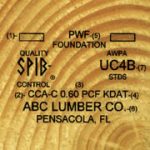 While an embedded column pier design on a gravel base sounds wonderful, Code does require a concrete or otherwise approved footing below isolated columns in order to properly distribute weight of building and applied loads. Actual testing of pressure preservative treated columns for over 60 years has proven there to be no decay of properly waterborne pressure preservative treated wood even in the most severe climates (this testing is ongoing in Mississippi). UC-4B rated pressure preservative treated wood is rated for structural use in fresh water, so a column being wet would not increase its chances of decay. In order for decay to occur there must also be oxygen, which is only present in the upper few inches of soils.
Please feel free to contact me with any questions or concerns regarding any post frame building structure. I would also invite you to subscribe to my blog, where there are currently over 1800 searchable articles regarding post frame construction.
“Thank you for your comments. The failures we have seen may have quite well been from pour constructions procedures done 10 to 15 years ago. No way to tell.
I will look into your articles and may have to change our policies”
Building Officials are not our adversaries and provided with accurate data policies can be crafted to create a winning solution for all parties involved!
 DEAR POLE BARN GURU: I remember you had a checklist to follow when building a barndominium or pole barn but I’m not sure where I saw it. Can you email where I can find it again? Thank you! Appreciate your time. MONICA in COLOMA
 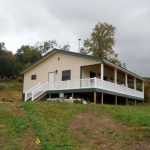 DEAR POLE BARN GURU: The area where I plan to build a pole barn required fill to bring the grade up to the driveway level. My plan is to install concrete piers with the column brackets installed on top of the pier. My question is do I need to have the concrete pier depth into the virgin ground? The fill was not compacted but has been setting for one year. Also, if the pier does need to engage with virgin ground, how deep into the virgin ground does the pier need to be? CRAIG in EAST WATERBORO
 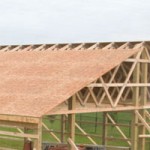 DEAR POLE BARN GURU: My contractor failed to plumb, level and square up the wall of my 40×40 pole barn before he installed the trusses and purlins. Can this be fixed before he installs the sheathing for the standing seam metal roof? Thanks in advance, PAUL in SMITHFIELD
 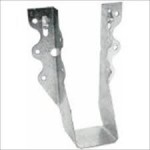 DEAR BOB: Weirdly enough I have installed probably tens of thousands of joist hangers and had seriously never given a thought to this (or experienced a challenge). Obviously the engineers at Simpson Strong-tie have thought this all through in designing these parts. I would think even if you were able to drive nails in from opposite sides perfectly so as they would hit each other, the point of the nail from one side would tend to deflect the nail from the opposite side. In all reality, because the holes are so close to the truss, the nails are going to be driven in at a slight angle (whether driving by hand, palm nailer or a gun). Installing all of the nails should not compromise the wood.