Today’s “ask the Guru” answers reader questions about the “rat guard” around the perimeter of slab, if Hansen Pole Building erects structures in the Portland area, and if we provide aftermarket wainscotting for an existing building.
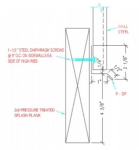 DEAR POLE BARN GURU: Hello, I’m curious about the 2×8 “rat guard” around perimeter of slab. Is it OK to place concrete/gravel/soil against the rat guard to a certain height – if so, how deep is typical? Or are you trying to keep the entire rat guard exposed? Thanks in advance! ED in WEST RICHLAND
DEAR ED: In our post frame industry, we are likely exceptions, as we have splash planks pressure preservative treated to structural in ground use requirements (UC-4B). Most providers use lesser degrees of treatment either UC-4A (good for touching ground, but not buried in it) or UC-3 (above ground use only). Unless you are certain what you have meets UC-4B treatment specifications, you should leave it entirely exposed.
 DEAR POLE BARN GURU: Do you erect the buildings as well in our area? Thank you! DANA in PORTLAND
DEAR DANA: Thank you for your interest in a new Hansen Pole Building. While we ourselves are not building erectors, we do have an extensive network of independent contractors, one or more of whom should be able to service your needs. Please complete information at bottom of this page: https://www.hansenpolebuildings.com/builder-terms-conditions/
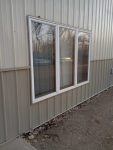 DEAR POLE BARN GURU: Do you sell wainscoting on its own? We already have a pole barn. TISHA in BEND
DEAR TISHA: We typically do not provide individual components for buildings. You will be best served to reach out to whatever steel roll forming company provided your building’s steel siding.
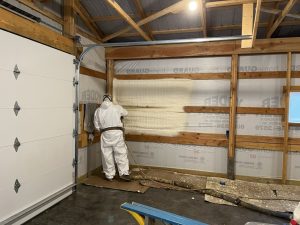 DEAR ED: Provided you are including your building’s attic area in your conditioned space (not insulating directly above ceiling) then closing off your vented ridge would be correct. I have not been able to find anything printed to verify adequacy of R-14 for roof insulation with closed cell spray foam in Climate Zone 3 (South Carolina), indeed 2009’s IECC (International Energy Conservation Code) used by South Carolina would seem to lead one to believe ceilings require a minimum of R-30 (Please see Table 402.1.1
 DEAR JASON: While I have heard of builders installing ceiling steel liner panels on trusses spaced even 12 feet apart without any additional support, my personal comfort zone is five feet – meaning, in your case, I would be adding 2×4 ceiling joists between my trusses. Make sure your trusses are designed for at least a three psf (pounds per square foot) ceiling load (truss drawings will show this as BCDL – bottom chord dead load) otherwise they will not be adequate to support weight of a steel ceiling.
 To reach two hours, you should have two layers of 5/8″ Type X on each side of your framed wall. You also need to insure any rain or snow coming off your roof does not land in your neighbor’s yard. This will entail a slight setback to allow for gutters and you will need a snow retention system on this side of your roof (this is assuming we are discussing an eave side and not an endwall).