This week the Pole Barn guru answers reader questions about an insulation retrofit for a 72×36 pole barn with no ridge or eave vents, if one can add soffit the an existing building with no overhangs, and if the Guru has any pricing knowledge for a fan and heater to hang from a ceiling.
DEAR POLE BARN GURU: Hello, Thank you for all of your great content. I have a 72×36 pole barn that I want to insulate. I’ve attached some pictures of the interior so you can see what it looks like. The attic space doesn’t appear to have any ridge or eave vents. I’ve taken bits and pieces from everything I’ve read but I want to be sure before I move forward. I know spray foam is an option but for this size building, it’s quite expensive. My thoughts are to insulate the walls with rockwool with a vapor barrier on the warm side. No vapor barrier on the ceiling with blown in rockwool, and then vent the attic space through the side walls with both high and low vents. Would love your feedback. I live in Northern Utah. Thanks for your help! JARED in PLAIN CITY
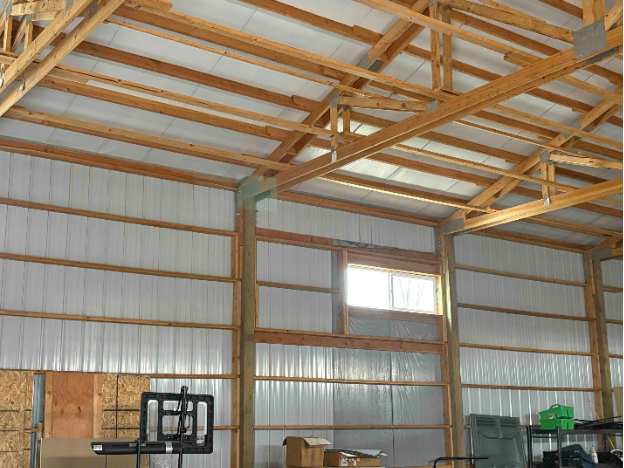
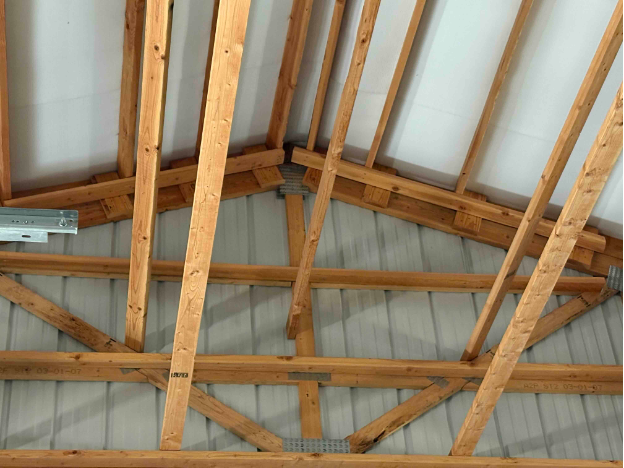
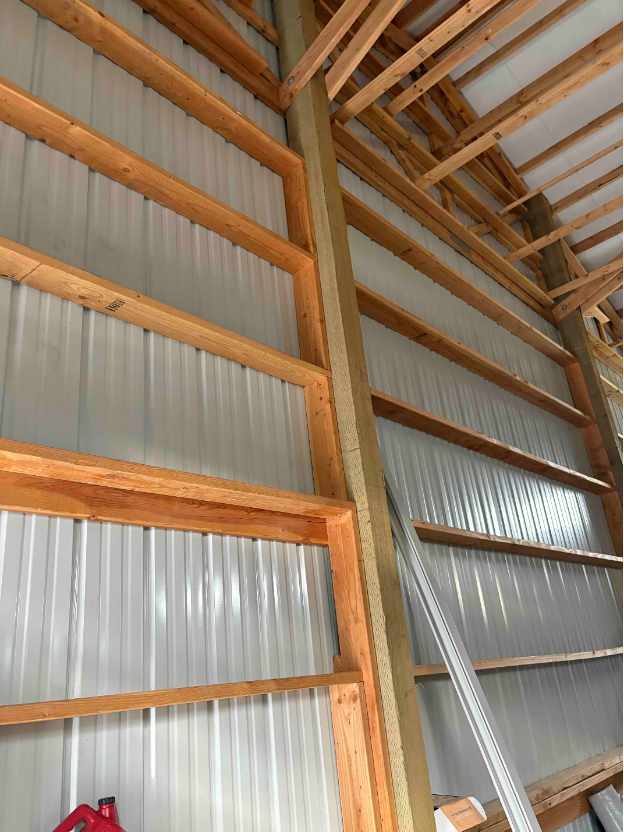
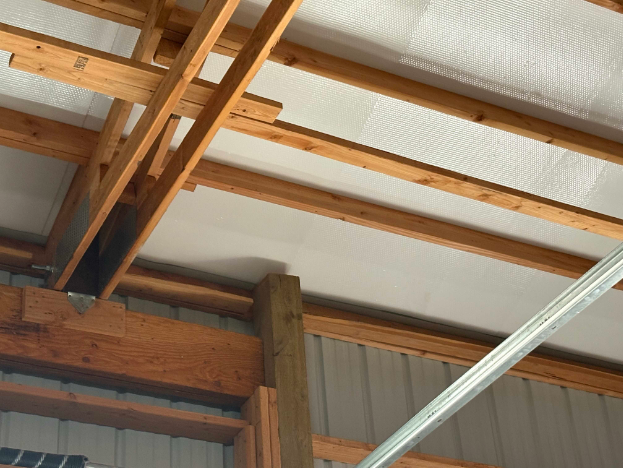
DEAR JARED: Provided your roof trusses are designed to support a ceiling load you are spot on with your approach to insulating. For venting – remove ridge cap, cut our condensation control at peak of roof, replace ridge cap adding vented closure strips. For air intake, add gable vents in lower half of each endwall. You will need to add no less than 312 square inches of net free ventilating area in each endwall.
DEAR POLE BARN GURU: Is there any way to add a soffit to an existing pole building? Thanks. PETE in FREMONT
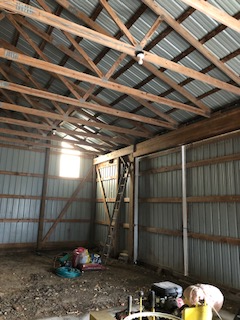
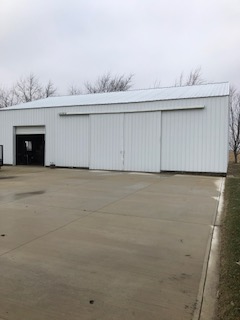
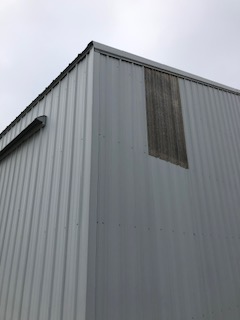
DEAR PETE: It would be extremely difficult to do it right from what you have. If it was my own and I was absolutely determined to have eave overhangs I would remove all of the roof steel and replace it with steel long enough to create an appropriate overhang (likely 18″). I would order it with an Integral Condensation Control factory applied, to avoid condensation challenges.
I would consult with a Registered Professional Engineer to evaluate if my column footings will be adequate to support loads on this now greater roof surface (not just dead weight, but also appropriate snow loads). This engineer could advise as to how to properly structurally add “tails” to trusses and confirm truss carriers (headers between columns) are properly sized, or if they need additional reinforcement.
Sidewall steel would be cut down and support for soffit added to columns. Besides new roof steel material investments include: ridge cap with vented closures, new rake trims, soffit, #12 x 1-1/2″ powder coated color matched diaphragm screws, fascia trim, soffit, J Channel below soffit at top of wall.
 DEAR POLE BARN GURU: What is practical priced good ceiling fan for a post frame 36 x 60 work shop, I plan on installing two. What height is good for a Modine hotdawg hanging natural gas heater with building with 14 ft walls? SCOTT in WISCONSIN RAPIDS
DEAR SCOTT: Having no personal experience with either, I frankly would not want to venture a guess. You might want to browse through “Pole Barns and Buildings” group on Facebook as yours are frequently discussed topics. Here is a link https://www.facebook.com/groups/2337434209870475
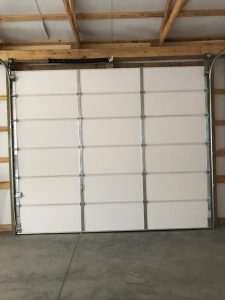 DEAR CHRISTOPHER: If you are looking for security you should consider upgrading to sectional steel overhead doors. Sliding doors are not secure and do not seal tightly (as you have probably determined).
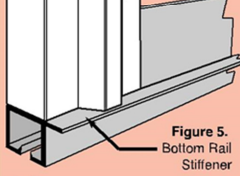 DEAR DAWN: You have discovered why ‘modern’ sliding doors use a bottom door girt with a slot, where as door slides open, a building mounted guide keeps doors tight to your wall. My best recommendation would be to have a machine shop fabricate up new bottom tracks – if you only have to replace them once every 50 years or so, it would prove to be a sound investment.
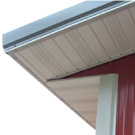 Paraphrasing Shakespeare’s bard Will, “To be open, or not to be open, that is the question”. Overhangs can either be open (which has nothing to do with allowing flying things like birds and Rocket J. Squirrel into the building) or enclosed. With “open” overhangs, as one stands beneath the overhang and looks straight up, the wooden framing which supports the fascia board, fly rafter and overhanging roof sheathing is exposed to the eye. The overhang IS, however, completely closed to letting the outside weather (insects/birds) into the building. It’s the overhang area which is not enclosed…no horizontal soffit panels.