This week readers “Ask the Guru” about the use of utility poles for post frame “equipment cover,” an Estimated Cost for a 50X80X16 pole barn, and if our kits come with Floor Plans.
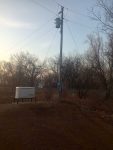 DEAR POLE BARN GURU: I have 3 hi-cube 40′ shipping containers configured in a “U” shape ( open on one end). These are located near Amarillo in the Texas panhandle. I would like to build a open span 40′ x 40′ x 14′ height pole barn “equipment cover” over the center of these shipping containers. These shipping containers have doors on one end and 4 doors down one side. The containers that form the sides of the “U” configuration will have their sides with 4 doors orientated so pointing to the inside of the “U” ( under cover ). I am planning on using six utility poles for columns (6′ deep), headers across the columns to support 40′ wood trusses & wood purlins to attach R-panel 26 gauge roofing panels to. The sides will be finished with R-panel siding to the top of the shipping containers. What recommendations would you have for my design or would you recommend I-beam rafters instead of trusses? SCOTT in AMARILLO
DEAR SCOTT: I would strongly recommend against use of utility poles (read more here: https://www.hansenpolebuildings.com/2012/11/used-utility-poles/).
My recommendation would be to invest in a fully engineered building using properly pressure preservative treated glulaminated columns, placed every 10 feet, to avoid your door openings. https://www.hansenpolebuildings.com/2024/11/new-hansen-pole-building-roof-supporting-columns/
Prefabricated wood roof trusses should be directly aligned with eave side columns https://www.hansenpolebuildings.com/2024/11/new-hansen-pole-buildings-prefabricated-roof-trusses/
29 gauge steel will likely do everything you need it to do https://www.hansenpolebuildings.com/2012/01/steel-thickness/
DEAR POLE BARN GURU: I’m just wondering an Estimated Cost for a 50X80X16 pole barn just wondering if it’s in my budget is it 15-20 grand? 30-50 grand? 60-100 grand? Thanks BOB in ENUMCLAW
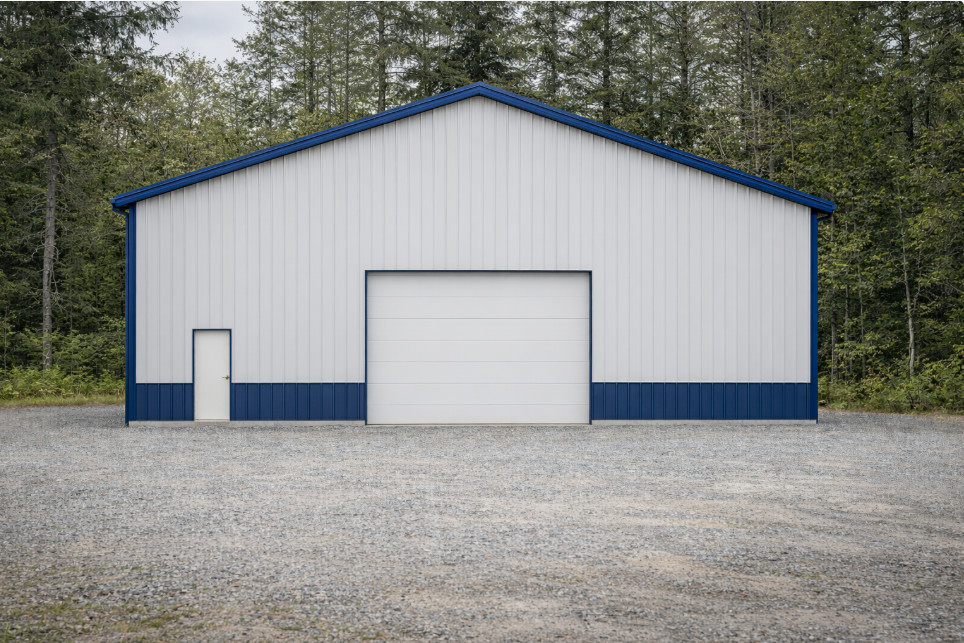
DEAR BOB: Thank you for your interest in a new Hansen Pole Building.
Hansen Pole Buildings has provided over 1000 affordable, fully engineered, custom designed post frame buildings to our clients in Washington. You are likely to find keeping with multiples of 12 feet in width and length will result in cost savings (e.g. 48′ x 84′ as an example). For an idea of potential investment please visit https://www.hansenpolebuildings.com/pole-barn-prices/ This should also prove helpful reading: https://www.hansenpolebuildings.com/2024/04/things-hansen-pole-buildings-does-better-than-any-other-post-frame-building-provider/
 DEAR POLE BARN GURU: I am looking at a few of your barndo kits – my main question is do they come with floor plans? I don’t see the floor plan on the purchase page or are these just shells? LIZ in BARK RIVER
DEAR LIZ: We have an in-house team of floor plans specialists who can work with you to craft an ideal dream floor plan to best meet your family’s needs and budget. For more information, please visit: http://www.hansenpolebuildings.com/post-frame-floor-plans/
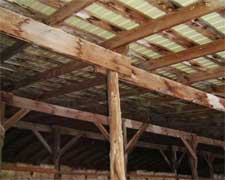 “
“ Trying to save a few bucks on your pole barn and don’t care about longevity or ease of use, then used utility poles may be an answer. Most people, who are going to invest an average of $50,000 into a new building, prefer to have a structurally reliable design solution however.
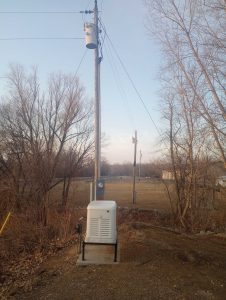 Utility companies have a huge financial investment in their infrastructure, which includes utility poles. The cost of a pole is far more than the piece of treated timber itself – it includes transportation (from the treatment plant, to the utility company yard, to the installation location), equipment and time to install the pole, as well as regular upkeep and maintenance. With all of these costs, and the pressure to not lose money, utility poles are not normally going to be replaced any earlier in their life cycle than has to be done.