Tag Archives: bardominium

Gable Venting, Building “Installation” Included, and a “Livable” Barndo?

This week readers “ask the Guru” about how to best vent gable ends of a structure with no overhangs, if Hansen includes “installation” with purchase of a kit, and Mike asks if these barndos are “livable.”
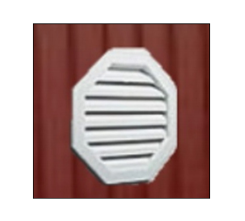
DEAR POLE BARN GURU: I am working on a 30’x40′ pole barn that has no eave overhang/vented soffit. I am planning to renovate the barn for a customer of mine and want to make sure I order/install the correct gable end venting. Please let me know if you have any information regarding the project to make sure I best serve my customer! Let me know if you need any more information regarding the barn. Thank you! PEYTON in TRAVERSE CITY

DEAR PEYTON:

• R806.2 Minimum Vent Area. The minimum net free ventilating area shall be 1/150 of the area of the vented space. Exception: The minimum net free ventilating area shall be 1/300 of the vented space provided one or more of the following conditions are met:

1. In climate zones 6, 7 and 8, a Class 1 or 2 vapor retarder is installed on the warm-in-winter side of the ceiling.

2. At least 40 percent and not more than 50 percent of the required ventilating area is provided by the ventilators located in the upper portion of the attic or rafter space. Upper ventilators shall be located no more than 3 feet below the ridge or highest point of the space, measured vertically, with the balance of the required ventilation provided by the eave or cornice vents. Where the location of wall or roof framing members conflicts with the installation of upper ventilators, installation more than 3 feet below the ridge or highest point of the space shall be permitted.

• R806.3 Vent and Insulation Clearance. Where eave or cornice vents are installed, insulation shall not block the free flow of air. A minimum of a 1 inch space shall be provided between the insulation and the roof sheathing and at the location of the vent.

With 1200 square feet, if you vent ridge with at least 231 square inches of NFVA, but no more than 288 square inches, you can use gable vents to provide an air intake so total gable and ridge NFVA is 576 square inches (these values being bare minimums). Beware of gable vents as their actual physical dimensions are far greater than their NFVA.


DEAR POLE BARN GURU: Is installation included in kits? NICOLE in BRIGHTON
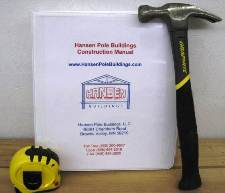
Hansen Buildings Construction ManualDEAR NICOLE: Hansen Pole Buildings is America’s leader in providing fully engineered, 100% custom designed, post frame building and barndominium kits, with multiple buildings in all 50 states. Your new building kit is designed for the average physically capable person, who can and will read and follow instructions, to successfully construct your own beautiful building shell (and most of our clients do DIY – saving tens of thousands of dollars – need a builder, we can probably help you there too https://www.hansenpolebuildings.com/builder-terms-conditions/). We’ve had clients ranging from septuagenarians to fathers bonding with their teenage daughters erect their own buildings, so chances are – you can as well! Your new building investment includes full multi-page 24” x 36” structural blueprints detailing the location and attachment of every piece (as well as suitable for obtaining Building Permits), the industry’s best, fully illustrated, step-by-step installation manual, and unlimited technical support from people who have actually built post frame buildings. Even better – it includes our industry leading Limited Lifetime Structural warranty! We would appreciate the opportunity to participate in your new pole building. Please email your building specifics, site address and best contact number to our Design Studio Manager Caleb@HansenPoleBuildings.com 1.866.200.9657 Thank you.
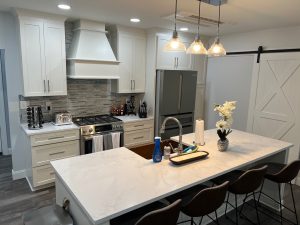
 

DEAR POLE BARN GURU: Are these barndos livable? MIKE in BETTENDORF

DEAR MIKE: Absolutely they are! I built my first one in 1990 as a combination ADU/Garage/Office and it has been in use continually now for 36 years! My most current personal one was built nearly 20 years ago, has 8000 finished square feet on two levels plus a mezzanine (it includes a basketball half-court and two elevators). Tens of thousands of barndominiums are now being built every year in America. We have provided them to clients in nearly every state.
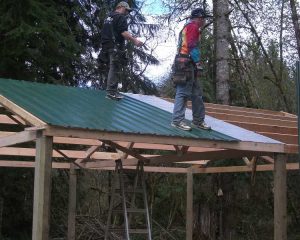
Roof Steel, Building a Post Frame House, and Fire Restoration

This week the Pole Barn Guru answers questions about a possible roof steel replacement, planning a post frame house, and assistance finding a contractor to complete fire restoration of a post frame building.

DEAR POLE BARN GURU: Good day PBG, I have a huge old wooden beam barn currently covered with standing seam tin roofing. I thought that would be the best to keep. However, it seems I have to have it painted more frequently and expensively than I planned.

Would it make sense to change the type of roofing?  Perhaps 50 year residential house shingling? There are so many good roofers competing for that business, I think I can have it done relatively cheaply. What about the new membranes I see on the market?

I value your thoughts on this.

Thank you for your consideration

JOHN in WASHINGTON D.C.

DEAR JOHN: Good afternoon. Something is wrong with your existing roofing or it has been on for many years as it should not have to be repainted.

For economy and durability I would recommend using through screwed 29 gauge three foot wide panels with Kynar paint (for any color other than White).

Shingled roofs are probably not what you think they should be: https://www.hansenpolebuildings.com/2018/10/ask-the-builder/

I would need more clarification from you on “membranes”.

DEAR POLE BARN GURU: Hi there!! I am a single mom with 1 daughter. I want to build a pole barn house on my mom’s land. My price range is about 100k and I have about 20k to put down. I know absolutely nothing about building a home and especially nothing about a pole barn home. I am hoping I can spend less money on the outside and be able put more money on the inside to have the amenities and design/layout that I want. Where do I even begin?

THANK YOU FOR ANY HELP YOU CAN OFFER!!

JELEE in JOPLIN

DEAR JALEE: You have come to the right place. Our team members at Hansen Pole Buildings are barndominium experts. Links in this article will get you started: https://www.hansenpolebuildings.com/2019/10/show-me-your-barndominium-plans-please/
Plan tips – consider these factors:

Direction of access (you don’t want to have to drive around your house to get to garage doors)

‘Curb appeal’ – what will people see as they drive up?

Any views?

North-south alignment – place no or few windows on north wall, lots on south wall
Overhang on south wall to shade windows from mid-day summer sun If your AC bill is far greater than your heating bill, reverse this and omit or minimize north overhangs.

Slope of site


DEAR POLE BARN GURU: Hello, I’m in need of someone to make a repair to a shop bay that received some fire damage. It’s located in Columbia, Tn. just an hour south west of Nashville. Do you some one that can make repairs on these metal over wood frame buildings? Someone I could set up a meeting with to get a quote?

Thanks DAVID in COLUMBIA

DEAR DAVID: You are nearly neighbors with our oldest daughter Bailey who lives in Shelbyville!
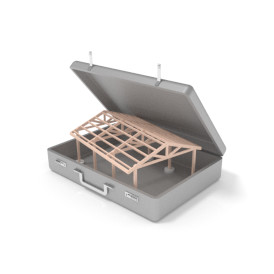
If you respond with photos of your building damage and a contact phone number we can post it up for members of Hansen Pole Buildings’ independent Builder Network to contact you directly. These builders are not affiliated with Hansen Pole Buildings and it is totally up to you to properly vet them out: https://www.hansenpolebuildings.com/2018/04/vetting-building-contractor/


Are Concrete Piers OK in Earthquake Areas?

Welcome to Ask the Pole Barn Guru – where you can ask questions about building topics, with answers posted on Mondays. With many questions to answer, please be patient to watch for yours to come up on a future Monday or Saturday segment. If you want a quick answer, please be sure to answer with a “reply-able” email address.

Email all questions to: PoleBarnGuru@HansenPoleBuildings.com

DEAR POLE BARN GURU:Why are concrete piers not recommended for pole buildings in earthquake areas? YELLING FROM YELM

DEAR YELLING: Part of why I love what I do for a living is I get to learn new things every day. I’d never heard of concrete piers not being recommended for pole buildings in earthquake areas – and have researched it highly, without finding any data to back up the premise.

Post frame (pole) buildings perform admirably in earthquakes as they are very lightweight, as well as flexible, compared to most other construction techniques. The heavier a structure is, the more it will be impacted by seismic forces. Most pole building construction relies upon wooden columns which are embedded in the ground (usually in concrete). A true concrete pier (a hole entirely filled with concrete) with a bracket to attach a column to the pier could prove to be a different story. In the event of a seismic event, the bracket/column connection could very well act as a hinge point.

DEAR POLE BARN GURU:I’m building a Barndominium 36×40 and I wanted to know how should I insulate the walls? Without creating a mold and moisture problem. Should I wrap what type of plastic wrap around the outside of 2×6 outer walls between R-panel? Also on the inside of plastic wrap between Sheetrock walls put R-19? And put R-30 in attic? If I wanted to put tongue and groove piney knot boards on inside walls what should I put up over insulation and 2×6 studs to nail the tongue and groove boards up to? To also help insulate walls?

Do you recommend a certain size a/c and heat pump unit for a 36 x40 barndominum ? Thank you for your help. BARNDOMINIUM BOB

DEAR BOB: As for R-values, without knowing where you are geographically, I can’t speak to what level is appropriate for your specific climactic conditions.

Walls – I would housewrap the outside of my framing, use BIBs insulation, cover the inside with clear plastic for a vapor barrier. If you intend to run the boards vertically on the inside – you can use bookshelf style wall girts to create both the insulation cavity and the support for your inside finish.

Attic – make sure to order trusses with an “energy heel” – deep enough to allow for the full thickness of the insulation to extend to the outside of the building sidewalls.

As for HVAC – your local HVAC experts can recommend the proper size unit for the cubic footage of space you will be conditioning.