Determining Rot in Existing Horse Barn Poles
Loyal reader KEVIN in EFLAND writes:
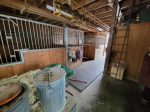 “Hello! First, thank you for all the super helpful information about pole barns! Now the context and question…. We’re thinking about making an offer on a house with a 5 stall horse pole barn, probably close to 30 poles, maybe 1,000 square feet. The house was built in 2007 so I assume the barn was built the same year and certainly built before 2012. The site is all clay. I suspect the poles were not treated for UC-4b but don’t see any signs of rot. So, I think if I have one question it is there a person in this area (Efland, Mebane, Hillsborough NC) that could inspect the barn and let me know what they think? Poles are rotting or not rotting… If they are rotting, here’s how long the poles will still be OK, here’s a plan and cost to replace them, etc. Now, if you afforded me a second question, short of digging 6 inches deep around every pole to look for rot, are there things I can do to see if there is an issue? The barn itself still looks nice and square… no noticeable sag. There’s certainly some rot on a small, maybe 4 foot portion of what I think is the sill plate. Thank you for your help!”
Thank you for your kind words, they are much appreciated.
Clay-heavy soil creates significant challenges for structural lumber because its poor drainage prevents natural drying process necessary to inhibit fungal proliferation. When under treated columns are embedded in these environments, surrounding earth acts as a reservoir for water, maintaining high moisture content required by wood-destroying organisms to thrive and initiate premature decay.
Incorrectly rated lumber can fail prematurely when exposed to aggressive environmental conditions accelerating decay. Primary factor is persistent moisture, as decay fungi require wood’s moisture content to exceed 20 to 25 percent to thrive. Poorly draining soil, such as heavy clay, or areas where water pools around post base maintain this high moisture content, creating an ideal habitat for rot. Constant saturation also promotes chemical preservatives leaching into surrounding soil.
Soil chemistry also affects preservative longevity. Highly acidic soils (e.g., in peat bogs or areas with high organic matter) are aggressive toward copper-based preservatives and accelerate their depletion. Site-specific factors, including soil type, geology, and climate, directly influence rate biocides (treatment chemicals) are lost. Decay is a biological process driven by fungi and, in some regions, subterranean termites.
While treated wood resists these biological attackers, a consistently warm and wet environment increases potential for decay organisms. Fungi thrive between 50 and 90 degrees Fahrenheit, meaning southern regions with high humidity present a greater decay hazard than cooler, drier climates.
Reliable local professionals in your area can be found through digital matching services where you can provide specific details about your barn to receive relevant quotes. When interviewing candidates, it is essential to ask for a customer reference list and their specific experience with wood-frame decay or post-foundation issues to ensure they are right fit for your property.
Structural engineering firms often offer specialized condition assessments going beyond standard home inspections, making them well-suited for identifying whether post rot compromises your barn’s structural stability. Standard industry practices for moisture inspection often involve using a probe meter to determine wood’s internal moisture content, crucial in diagnosing potential rot extent. Licensed and certified experts are required to perform these calculations, as mistakes in structural repair can be extremely dangerous and jeopardize anyone near buildings safety.
 Flat rate pricing is common for these assessment types, with structural engineers typically charging $550 on average for an inspection and necessary structural calculations. Depending on your pole barn’s complexity and how easily accessible posts are for testing, you may find costs range from $300 to $800. Hourly professional fees generally fall between $100 and $250 per hour if work is not billed as a flat rate project. Project success factors depend on clear communication about your goals, so prioritize firms demonstrating responsiveness and provide practical, cost-effective solutions for unique building issues. Hidden defect detection is a primary objective for professionals who perform thorough inspections to ensure your investment remains safe and functional for years to come. Professional oversight ensures any identified rot is addressed according to safety standards, protecting both your property and those who use it.
To determine, on your own, if an embedded pole barn post is rotting, inspect post base for decay signs, such as softness or sponginess when probed with a screwdriver. If screwdriver sinks more than one-quarter inch into wood or feels compromised, it indicates structural failure due to rot.