Air Spaces in Walls
Reader GARY in HAMILTON writes: “My building is metal. I beams, 6 inch purlins and R panel exterior. I am going to finish the interior with sheet rock. 1. If I put up 2×4 stud wall plus a radiant sheet plus R-13 rock wool insulation. Do I need to be concerned about the 6 inch space between the radiant barrier and metal R panel.”
If (and this is a BIG IF) you could 100% entirely air seal your radiant barrier, you might be okay. In reality it is unlikely to occur.
Uncontrolled air movement through insulated wall assemblies is a primary driver of energy waste, moisture damage, and decreased occupant comfort in modern buildings. While builders previously utilized deliberate air spaces for ventilation, these voids in today’s highly insulated structures often function as destructive pathways for heat loss and condensation rather than as helpful barriers.
Air gaps reduce R-value of wall insulation. Thermal bypass effects cause up to double heat loss as warm indoor air rises while cold air falls, creating a continuous loop. Wind washing issues degrade insulation R-value as external air penetrates gaps and strips away materials thermal resistance. Insulation settling gaps create hidden cold wall spots as gravity and vibration leave unprotected cavities bypassing efficiency standards. Trapped moisture ingress causes mold and structural damage as poorly filled or bridged cavities collect water instead of acting as a break.
 Air spaces within wall cavities act as conduits for convective loops, where warm air from interior is replaced by cold air from outside or unconditioned zones. This circulation bypasses intended performance of insulation materials, effectively short-circuiting thermal envelope and forcing heating or cooling systems to work significantly harder to maintain stable temperatures. Convective air currents moving within a wall assembly can render high-quality insulation nearly useless by providing a path for heat to travel around material. Unsealed electrical boxes and plumbing penetrations frequently serve as entry points for these currents, creating localized drafts often misidentified as insulation thickness problems. Increased moisture risk occurs because these circulating air loops transport water vapor from warm interior finishes to cold exterior surfaces, where it condenses into liquid water.
Modern building science recommends filling all gaps between interior finishes and exterior cladding to eliminate convective spaces plaguing older, poorly detailed buildings. Because insulation efficiency relies on preventing air movement, focus has shifted toward achieving a perfectly airtight shell keeping conditioned air where it belongs and prevents external air from invading building envelope.
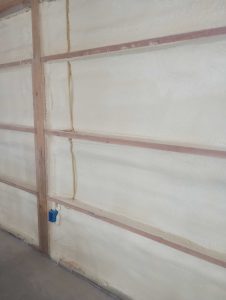
Assuming you do not want to take off wall steel to add a Water Resistant Barrier, I would apply two or more inches of closed cell spray foam to inside of wall steel. Then, build your stud wall as tight to insulation as possible, filling wall cavity entirely with Rockwool batts, with no interior vapor barrier.